
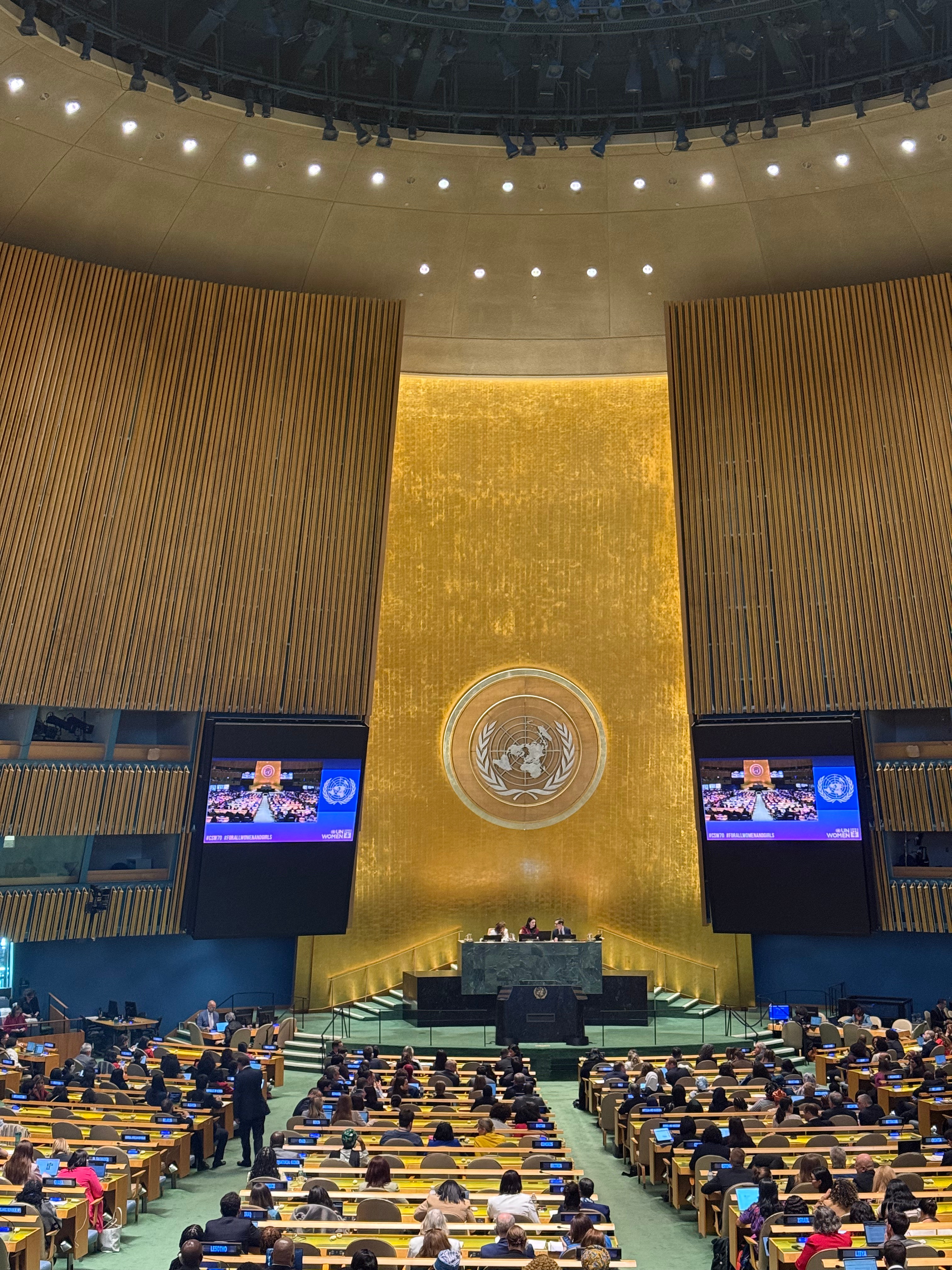
Over the past several months, political negotiations at the United Nations have entered a discernibly different phase. While tensions and difficult bargaining are hardly new, recent processes suggest a structural shift in how disagreement is managed and how outcomes are produced. The 70th session of the Commission on the Status of Women (CSW70) provides a clear case study of this transformation, particularly in relation to the evolving role of consensus as a tool of multilateral governance.
The Agreed Conclusions of CSW70, focused on access to justice for all women and girls, were adopted after weeks of negotiations. Yet the significance of the session lies less in the substance of the final text than in the procedure through which it was adopted. For the first time in the Commission’s history, the outcome was adopted through a recorded vote rather than consensus. This decision reflected not only the difficulty of the negotiation but a deeper recalibration of political expectations about how multilateral agreements can and should be reached.
This recalibration did not emerge in isolation. Preceding sessions of the General Assembly had already foreshadowed a departure from long standing practices. During the 80th session, votes were called on multiple resolutions that, in earlier cycles, would have been adopted by consensus. Committee agreed texts were reopened, and revotes were requested, undermining assumptions of procedural closure and taking away inclusive language. Together, these developments signaled that consensus may no longer be the current default operating mode across political UN bodies.
At CSW70, this reality shaped both strategy and behavior from the outset. The draft outcome text was put for a vote on the first day of the session, an early indication that the process would move differently. Traditionally, the early days of CSW are reserved for ministerial statements and informal consultations designed to bridge remaining gaps. By placing the text on the table immediately, the Chair effectively acknowledged that these gaps were unlikely to be resolved through incremental compromise alone.
The subsequent tabling of eight amendments by the United States at the final stage of negotiations, after not showing up for the first half of the six weeks process, further reinforced this assessment. The amendments spanned multiple thematic areas and reopened language that had already been the product of careful negotiation. While such moves are not unprecedented, their cumulative effect was to force delegations into explicit and public positions, rather than allowing quiet trade offs to sustain consensus.
This strategy, however, encountered its own constraints. In response, the Netherlands, proposed bundling all eight amendments into a single vote. Procedurally, this maneuver simplified the decision before the room. Politically, it transformed a series of very different disagreements, including topics such as gender, misinformation and unilateral coercive measures, into a binary choice. The result was a decisive rejection of the amendment package.
Yet the implications of this outcome extend beyond the failure of the amendments themselves. The voting pattern revealed a fragmented coalition landscape in which alignment was neither uniform nor stable. A significant number of delegations abstained, reflecting a complex set of priorities. Some of these countries had expressed dissatisfaction with aspects of the underlying text, stating at the same time that they could not accept the request to remove language on unilateral coercive measures, an issue with particular relevance for many countries in the Global South. Abstention, in this context, functioned as a means to avoid committing to one of the many positions within the discussion.
These dynamics illustrate how procedural tools are increasingly used to manage political fragmentation. Bundling amendments did not simply prevent their adoption; it exposed the limits of cross-issue linkage as a strategy for coalition building. While effective in the immediate vote, the tactic also highlighted the extent to which alliances are now contingent and issue specific. This represents a shift from earlier periods, when broader ideological groupings tended to produce more predictable voting behavior.
Following the rejection of the amendment package, the process moved quickly and the United States called for a vote on the Agreed Conclusions. Requests for additional consultation time were set aside, underscoring the role of procedural compression in securing outcomes when consensus is unstable. Such acceleration was a way to consolidate support, and the text was approved with only 5 abstentions and one vote against it – from the United States.
The decision to call a recorded vote on the Agreed Conclusions should be understood within this broader context. Votes in multilateral settings are not only mechanisms for decision making; they are tools of political signaling. They allow states to communicate positions to domestic audiences, delineate alliances, and define boundaries within the multilateral system. At CSW70, voting did not fracture support for the outcome; instead, it clarified lines of alignment that had already emerged through earlier procedural contests.
Similar dynamics were evident in other resolutions during the session. A Southern African Development Community-led resolution on HIV, women, and girls, traditionally adopted by consensus, was put to a vote by the United States. The result was near unanimous support, with only the delegation that requested the vote withholding approval.
Likewise, a proposed resolution from the United States on protection of women and girls through appropriate terminology was procedurally halted through a non-action motion led by Belgium on behalf of the European Union. These interventions reinforced shared expectations about acceptable negotiating practices, even as substantive disagreements persisted.
Importantly, moments of alignment did not equate to renewed consensus. Several delegations formally dissociated from aspects of agreed language, particularly regarding gender and sexual and reproductive health and rights. Such statements underscore the layered nature of agreement within contemporary multilateral processes. Numerical majorities can mask significant underlying divergences that will shape future negotiations.
CSW70 therefore offers several analytical insights. First, consensus should no longer be treated as the current baseline condition of multilateral diplomacy. It is an outcome that must be actively constructed and may not always be sustainable. Second, procedure has become a central arena through which political conflict is expressed and managed. Strategic use of amendments, packaging, non-action motions, and timing now plays a decisive role in determining outcomes. Third, coalition building is increasingly fluid, shaped by specific issue configurations rather than stable bloc identities.
For forthcoming processes such as the 59th session of the Commission on Population and Development, these lessons are instructive. Effective engagement will require more than technical mastery of rules or language. It will demand close attention to how procedural choices interact with political objectives in real time. The central challenge is no longer only what can be agreed, but how, under what conditions, and through which strategies, agreements can endure in an increasingly fragmented multilateral landscape.
 IntLawGrrls
Leave a comment