
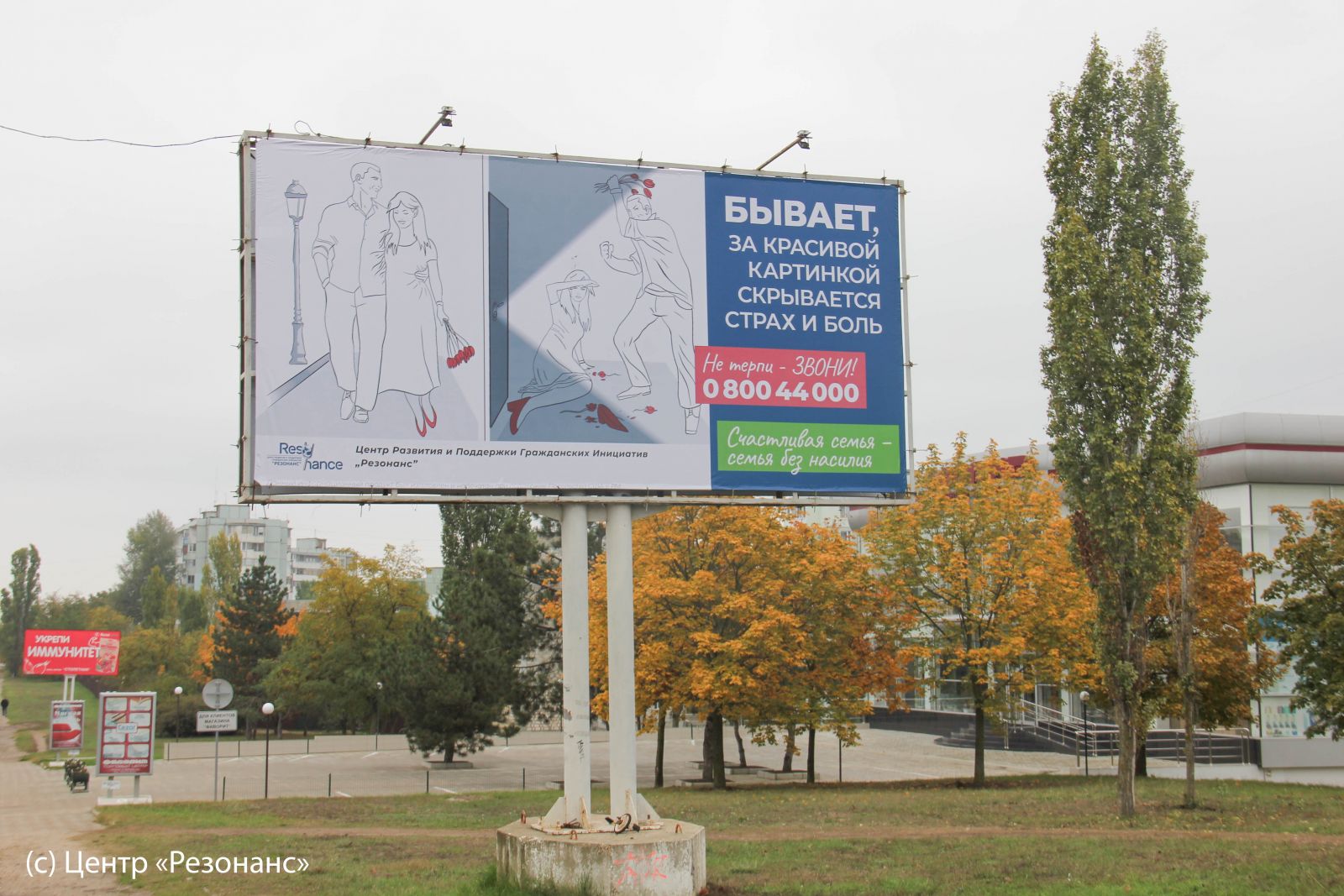
In 2021, something quietly unprecedented was happening in Transnistria, a breakaway, unrecognized territory of Moldova that has existed for more than three decades outside the international human rights treaty system. Local police officers, in a context where survivors of domestic violence have long been told that “family matters should stay inside the home”, were suddenly following protocols, referring women to crisis centres, and documenting abuse. The protocols they were using had not been written by legislators or international experts, but by local women’s NGOs. In 2023, the local Ministry of Health, in cooperation with these NGOs, issued medical guidelines on treating survivors.
None of this came from international treaties: Transnistria cannot ratify CEDAW or the Istanbul Convention, and no UN treaty body reviews its record. Yet protection systems are emerging, built from the ground up by women who refused to wait for international frameworks that may never arrive.
Their work raises a feminist question rarely asked in international law: what kinds of law emerge when formal rights exist, but everyday protection is generated outside formal legal structures?
Europe’s darkest grey zones
Europe’s contested territories are not all alike. Kosovo and Northern Cyprus exist under sustained international engagement, with UN missions and substitute forms of monitoring and reporting, while imperfect, provide ongoing external scrutiny in the absence of full treaty-based oversight. By contrast, post-Soviet unrecognized entities – Transnistria, Abkhazia, and South Ossetia – are characterized by minimal international presence, and women there are largely outside the gaze of global human rights institutions. These are Europe’s darkest grey zones, and this post is focused on them.
It is precisely this absence of effective international protection that makes feminist law-making from below most visible. Here, there are no treaty reporting cycles and no direct routes into international complaint mechanisms. For women, this produces a condition of double invisibility: as residents of unrecognized territories and as women living under deeply patriarchal governance. International law’s state-centred architecture quietly decides whose suffering becomes legally visible.
Legal prototypes in practice
When the local NGO Interaction launched Transnistria’s first domestic-violence hotline in 2009, local law contained no definition of domestic violence, There were no protection orders, no emergency procedures, and no state-run shelters. This legal situation remains unchanged. The hotline was established – and continues to operate – in a legal vacuum. By 2015, local NGOs had opened the region’s first and only shelter, supported by international donors but without state funding or a legislative framework. They created intake procedures, referral networks, and multidisciplinary support teams. Most importantly, they began training police officers. By 2022, the hotline had received about 18,000 calls. What began as an emergency response was gradually acquiring institutional form. In 2017, the local Ministry of Internal Affairs signed cooperation agreements with NGOs. In 2019, NGOs and the Ministry co-drafted response procedures. In 2021, those procedures were adopted as official police instruction.
The law did not create these protection systems. These systems created the conditions for law. When authorities began to formalize protections, they drew on practices women’s organizations had spent more than a decade developing and testing over more than a decade.
Abkhazia shows how feminist law-making unfolds when cultural resistance is strong. The traditional code Apsuara emphasizes family harmony and informal mediation, reinforcing patriarchal roles and discouraging legal intervention. When the Association of Women of Abkhazia succeeded in passing a gender-equality law in 2008, it marked progress. When they attempted to introduce domestic-violence legislation in 2012, local parliament blocked it, explicitly invoking tradition. The Association responded by developing appropriate practices. In 2024, representatives from local parliament, the Prosecutor’s Office, and women’s NGOs met for the first time to coordinate on domestic-violence policy. Here too, practice preceded formalization. Feminist institutions operated as if protection already existed, making its absence increasingly difficult to defend.
South Ossetia presents the starkest picture: minimal civil society, deep isolation, entrenched patriarchal norms. Yet even here, feminist intervention has shifted what institutions can address. In May 2024, MP Elena Dzhioeva introduced the territory’s first draft law on domestic-violence prevention, triggering the first parliamentary discussions of the issue.
Feminist law as survival practice
In these darkest grey zones, feminist legal theory’s core insight – that law must grow out of women’s lived experience – becomes a survival strategy. Women built protection around embodied knowledge of fear, dependency, and exposure to harm. Hotlines and shelters turned private suffering into collective knowledge, transforming violence from a private matter into a public problem.
This is feminist law-making from the margins. Double invisibility produces a double vision: women in unrecognized territories see both the drawbacks of state-centred international law and the possibilities of law beyond it. Operating outside treaties and effective judicial protection, they created prefigurative legal infrastructures – shelters, referral systems, and NGO-developed police response protocols – that enacted rights before anyone recognized them. When authorities later began to respond, they did not build these systems. They selectively drew on practices feminist organizations had already developed on the ground.
Conventional international law assumes protection flows from treaties to states and then to individuals. Grey zones reveal a different pattern: protection flows from women’s practice toward gradual formalization.
What grey zones reveal about international law
These territories expose a core feminist problem of international law. Treaty-based systems presuppose recognized statehood and political will. When these conditions are absent, the architecture offers no alternative routes. Women fall through gaps the system does not even name.
While IHL may apply in situations of active conflict, many long-term unrecognized entities no longer fall within such frameworks. The ECtHR’s doctrine of effective control formally extends human-rights obligations to territorial and supporting States, yet where territorial States lack effective control and supporting States deflect responsibility onto either territorial or de facto authorities, these international legal frameworks rarely translate into meaningful protection for local populations.
At the same time, these entities cannot ratify CEDAW, and protection systems for survivors function there anyway – fragile, donor-dependent, incomplete, but real. This suggests that legal obligation alone does not produce protection. Organized feminist advocacy, institutional creativity, and persistence often matter more.
When NGOs build shelters before laws authorize them, train police before governments require it, and develop protocols before ministries exist, they are not merely filling gaps. They are making law through practice.
Beyond recognition
The women building protection systems in Transnistria, Abkhazia, and South Ossetia are not waiting to be rescued by treaties. They are creating law themselves and show that accountability can grow from practice, that institutions can be built from need, and that feminist legal innovation happens where formal law is absent.
These territories remain unrecognized. The women are anything but invisible. Their work reveals something international law too often obscures: feminist law-making does not begin with treaties. It begins where women organize, document harm, build institutions, and insist – without recognition – that protection is not optional.

 IntLawGrrls
Leave a comment