
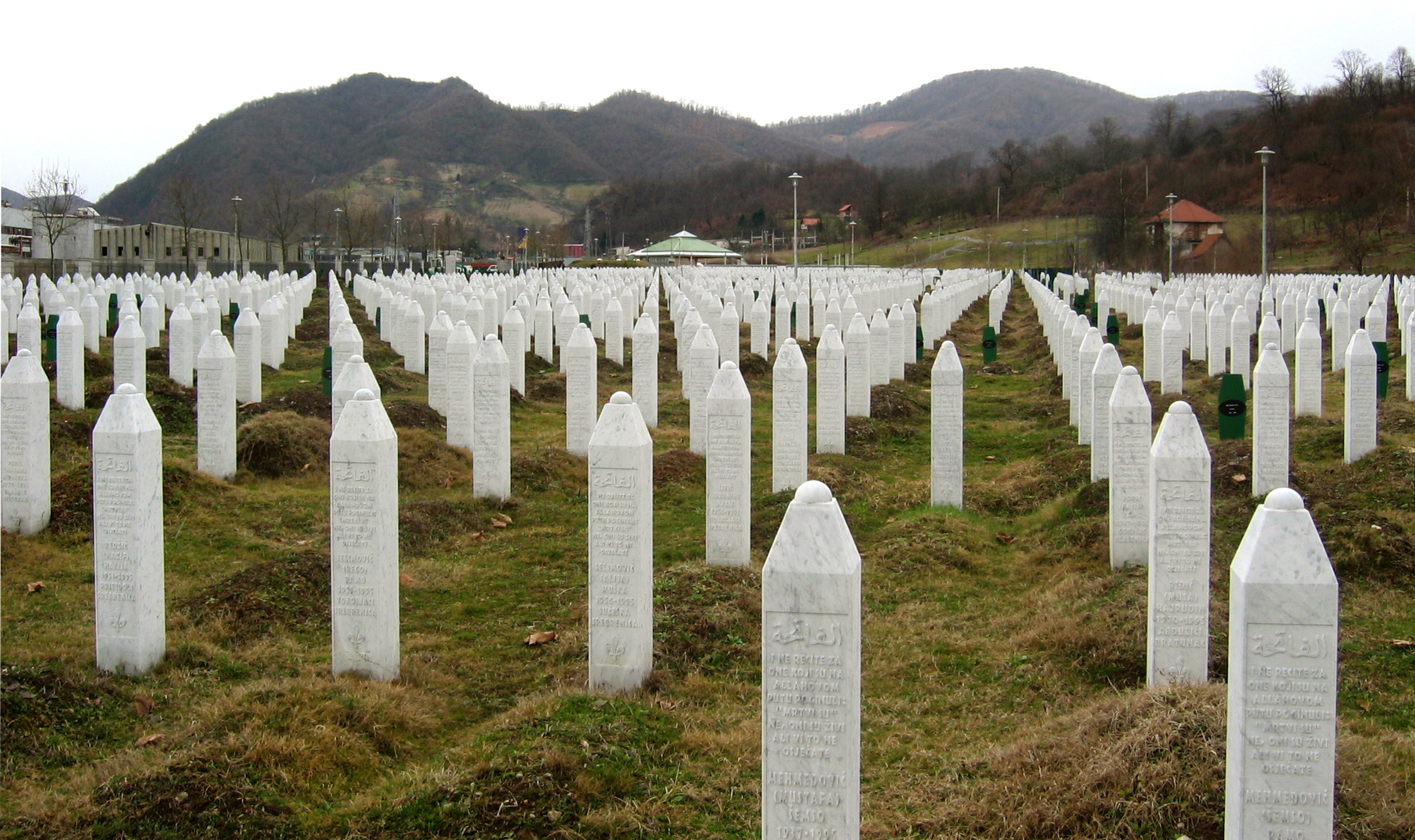
In 2001, the International Criminal Tribunal for the Former Yugoslavia issued the first judgment for genocide in Srebrenica in July 1995, convicting Radislav Krstić, a general of the Army of Republika Srpska (the entity in Bosnia and Herzegovina, hereinafter: “RS”), for the deliberate killing of thousands of Bosnian Muslim men and boys, and the deportation of women and children. The gendered dimensions of the Srebrenica genocide established a crucial legal precedent, as the ICTY ruled that Bosnian Serb forces “had to be aware of the catastrophic impact that the disappearance of two or three generations of men would have on the survival of the traditional patriarchal society,” adding that the “combination of mass murders and forced transfer of women, children and elderly inevitably resulted in the physical disappearance of the Bosniak population of Srebrenica.” This recognized systematic targeting of reproduction and community survival as core to establish genocidal intent. Later, Ratko Mladić, Radovan Karadžić, and other high-ranking military and political officials of RS were also convicted.
On May 23, 2024, the UN General Assembly adopted a resolution designating July 11 as the International Day of Reflection and Commemoration of the Genocide in Srebrenica. The text unequivocally condemns any denial of the “Genocide in Srebrenica” as a historical fact and calls on member states to preserve established facts about that genocide, including through education, to prevent denial and distortion of the truth. The resolution condemns acts that glorify persons convicted by international courts for war crimes, crimes against humanity, and genocide, including those responsible for the crimes in Srebrenica. It emphasizes the importance of completing the process of finding and identifying the remaining victims of the Srebrenica genocide and ensuring dignified burials for them. Member States are called upon to respect their obligations under the Convention on the Prevention and Punishment of the Crime of Genocide and relevant international law, with the aim of preventing and punishing genocide in the future.
On January 17, 2026, an incident occurred in front of the Srebrenica-Potočari Memorial Center. A member of the Chetnik movement (a term for Serbian nationalist and monarchist armed formations that appeared in various historical periods, today most commonly associated with World War II) from Serbia stopped in front of the entrance to the Srebrenica Memorial Center and engaged in provocative behavior, wearing a šajkača cap with a cockade, a symbol associated with the Chetnik movement, and taking photos. After being warned by the staff that such behavior was not allowed, he began shouting insults and declaring that it was “all Serbian land.” He was subsequently removed from the Memorial Center, and left the state the following day.
This is just one in a series of provocative stances as part of the broader problem of genocide denial in Bosnia and Herzegovina, which has evolved in recent years, taking various forms. From denialist stances, through the glorification of convicted war criminals in narratives portraying them as heroes, to murals, inscriptions, memorial plaques, and denial via online platforms, such actions do not merely strike at the still painful wounds of the victims, mothers who 31 years later are still searching for the remains of their loved ones.
In the meantime, the Mothers of the Srebrenica and Žepa Enclaves movement, formal as a human rights movement and structurally feminist, is a unique movement of its kind in the world, bringing together mothers of victims, and it was precisely this movement, under impossible conditions of return and confronting life after the conflict, through complete pressure for the search of the missing, that “forced” the international community to act. This is BiH’s primus inter pares term “grassroots justice,” i.e., an example of how justice can start “from below,” directly from the victims. A large number of women were left alone, and many of them still live alone in the places where the Genocide was carried out. This globally unique movement played, and continues to play, a major role in the fight for justice that is still ongoing.
Denialist stances are not only punishable under the criminal law of BiH but represent a direct violation of the States’ obligation under international law. As prescribed by the Convention on the Prevention and Punishment of the Crime of Genocide, States have the obligation not only to not commit genocide but also to prevent actions that lead to its denial and relativization, as established by the ICJ in its 2007 Bosnia v Serbia and Montenegro case. However, denial of the Srebrenica genocide continues to manifest publicly, often without adequate institutional response. Denial is not only a disregard for international judgments but also a re-traumatization of victims, mainly surviving mothers, wives, and children who have returned to their pre-war hearths.
According to the report of the Srebrenica – Potočari Memorial Center, in the period from June 1, 2024, to May 30, 2025, a total of 99 cases of genocide denial in the public space of BiH and the region were recorded. There were 76 cases of active denial of genocide and 21 cases of relativization of the crimes, plus one case each of support for perpetrators, acknowledgment of the crimes but not as genocide, and triumphalist discourse. Although the Criminal Code of Bosnia and Herzegovina provides penalties for genocide denial, prosecutions of individuals for such acts are rare or almost nonexistent.
The question arises, in a world where norms play an ever-diminishing role and the law of the strongest tends to prevail, how much we have learned from the Holocaust and “never again.” The difference is key – while after World War II all symbols associated with National Socialism were, at the very least, banned, in Bosnia and Herzegovina, insulting, denying, celebrating, and re-traumatizing victims is allowed. This points to a deep normative paradox in contemporary Bosnia and Herzegovina, where, three decades after the Genocide, denial and glorification of crimes are still tolerated, despite clear international legal standards and judgments.
This normative paradox hinges also on its gendered dimensions. Most Srebrenica genocide survivors, including mothers, wives, daughters navigate post-war Bosnia and Herzegovina amid structural gender inequality and marginalization. Returning to Srebrenica, these women faced not just familial loss, but denial, perpetrator glorification, and institutional indifference. They responded by organizing, tirelessly identifying remains and transforming grief into legal-moral action.
In 2026, as denial evolves from overt provocation to normalized rhetoric, the true test of international law lies not in proclamations, but in amplifying survivor voices, especially those long sidelined. Fighting denial wherever it appears keeps truth alive and humanity intact – making sure Srebrenica’s hard lessons live on for us all.

