Launching the Spring Issue of the Transitional Justice Institute Research Paper Series on SSRN

Catherine O’Rourke and Elise Ketelaars

We are pleased to announce the publication of a new issue of the Ulster University Transitional Justice Institute Research Paper Series on the Social Sciences Research Network. This exciting new issue engages both with highly-topical contemporary questions, as well as long-standing challenges in international law, peace, human rights and gender equality. First off, Thomas Obel Hansen considers the Policy Paper of the ICC on preliminary examinations and its potential to advance ‘positive complementarity’ between the operation of the court and the domestic pursuit of justice for conflict victims. At a time of apparent crisis for the court, scholarship such as Hansen’s that addresses this critical relationship between its operation and broader domestic impacts is critical. Aisling Swaine, the leading global expert in National Action Plans (NAPs) for Women, Peace and Security, examines relevant practice to date in the Asia-Pacific region. She demonstrates an exciting new methodology for gender-responsive planning, which has relevance well beyond the specifics of Asia Pacific, namely the ‘Gender Needs Analysis Tool’. Likewise, the findings, conclusions and recommendations offer immediate policy relevance to the current 63 UN member states with NAPs on Women, Peace and Security, as well as those currently developing or reviewing NAPs.

Contributions by Catherine O’Rourke and the joint article by Anne Smith, Monica McWilliams and Priyamvada Yarnell both address the question of international human rights obligations and their current and potential impact on Northern Ireland. Catherine O’Rourke, in research from the DFID-funded Political Settlements Research Programme, considers the recent report of the UN Special Rapporteur on Truth, Justice, Reparations and Guarantees of Non-recurrence on his country visit to Northern Ireland. She identifies the potential for the report to positively re-shape both the diagnostic (defining the problem) and prognostic (identifying the solutions) framing of the vexed issue of how to deliver accountability for past conflict killings and harms in Northern Ireland. Finally, Anne Smith, Monica McWilliams and Priyamvada Yarnell engage with the highly topical challenges of protecting human rights in Northern Ireland as the UK advances its withdrawal from the European Union. In a timely and important contribution, the authors consider how the long-promised Bill of Rights for Northern Ireland might finally be advanced as part of broader efforts to ensure continued human rights protections in the midst of Brexit.

Continue reading

Gender-based persecution on the International Criminal Court’s radar

Sexual and gender-based crimes were high on the ICC’s agenda in 2016 – a trend which looks set to continue this year. In March 2016, the Court handed down its first conviction for rape, and in December, its first trial to feature charges of forced pregnancy and forced marriage began.

There was also a focus on sexual and gender-based crimes in situations under preliminary examination, including the crime against humanity of ‘gender-based persecution’, which has never before been prosecuted by an international criminal tribunal.

burkas

Women in Afghanistan, one of the two preliminary examinations where the ICC Office of the Prosecutor is reviewing information on gender-based persecution (Photo credit: Shah Marai / AFP).

This focus on gender-based persecution can be seen in the ICC Office of the Prosecutor’s most recent Preliminary Examinations Report, which gives an update on the ten situations currently under ‘preliminary examination’ (an initial filtering process, in which the ICC Prosecutor reviews information on alleged crimes and decides whether a full-scale investigation is warranted).

The report confirms that the Prosecutor is on the brink of deciding whether to open an investigation into the situation in Afghanistan, which has been under preliminary examination in the since at least 2007.

This investigation, if it goes ahead, will be historic. It will be the first time that any international criminal tribunal, past or present, has looked into war crimes by US nationals. It will also be the first investigation to specifically contemplate the crime against humanity of gender-based persecution – or the first one on public record, at least.  Continue reading

ICC trial against Dominic Ongwen commences – some thoughts on narratives

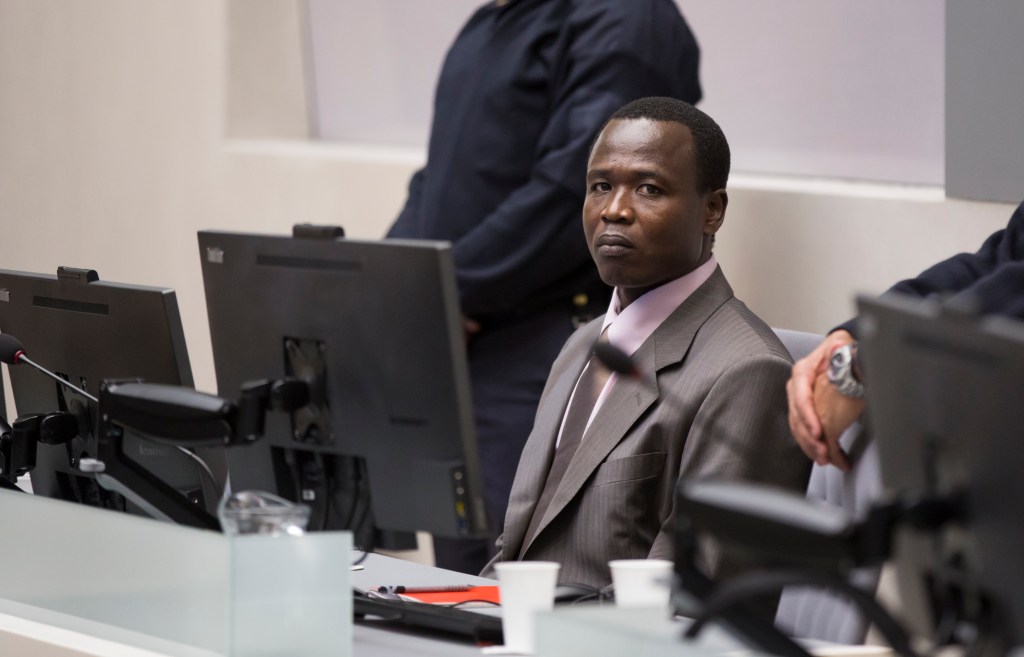
The trial against Dominic Ongwen, a former commander of the Sinia brigade in the Lord’s Resistance Army (LRA), started at the International Criminal Court (ICC) this week. On 6 and 7 December, Trial Chamber IX heard opening statements from the Prosecution and two teams of Legal Representatives of Victims. The Defence had requested to defer its opening statements to the beginning of the presentation of its evidence. The trial is an important one for many reasons, not least because of the difficult issue of Ongwen being a ‘victim-turned-perpetrator’ (see this post by IntLawGrrl Diane Amann). Rather than providing a detailed overview of the submissions, I want to focus on a specific issue that struck me listening to the Prosecution’s opening statements: (gendered) narratives and discourse.

As Michelle Jarvis writes in the introduction to the book Prosecuting Conflict-Related Sexual Violence at the ICTY, and as IntLawGrrl Daniela Kravetz wrote, there has been a tendency in international criminal law to focus -almost exclusively- on the sexual component of SGBV crimes when committed against female victims. This renders the violence aspect of such crimes almost invisible. On the contrary, where it concerns sexual violence against male victims, the focus has predominantly been on the violence component, as opposed to the sexual component, with such harm often characterised only as torture, or cruel treatment. These gendered dynamics have been pervasive; hence the significance of the ICC’s conviction in the Bemba case classifying rape of male victims as rape.

The Ongwen case marks another breaking point – the Prosecution has classified acts of sexual violence against women and girls not just as sexual violence (rape and sexual slavery), but as torture and outrages upon personal dignity. It has also included charges of forced pregnancy and forced marriage, two predominantly gendered (rather than sexual) crimes (see the Prosecution’s pre-trial brief for its pleadings in this respect). The Prosecution described the LRA’s systematic, institutionalised practice to abduct young women with the express aim of forcing them into an exclusive forced conjugal relationship (“forced marriage”) with LRA commanders. They were raped, forced to carry out domestic duties such as cooking or cleaning, were beaten for refusing to do so, and some bore children as a result of their repeated rapes. This policy was “vigorously enforced” within the LRA and constituted one of its “defining features”. Ongwen himself had many forced wives, some of whom were as young as 10 years old.

The Prosecution summarised in detail the testimony already given by seven of Ongwen’s forced wives to the Pre-Trial Chamber, and referred to broader contextual evidence from other witnesses who have yet to testify. Importantly, the Prosecution underscored that in using the terms (forced) “marriage” and (forced) “wife”, it did not seek to legitimise what occurred. The Prosecution stressed that, while a victim’s lack of consent “may have been obvious at first”, when they were subsequently “bludgeoned into silent submission” this did not mean the acts became consensual.

While it was thus clear the Prosecution was very aware of nuances in language, there was nonetheless a notable change in terminology in its submissions. Continue reading

A day to remember: Ongwen’s trial starts on 6 December

Tomorrow, 6 December, the trial against Dominic Ongwen will start before Trial Chamber IX of the International Criminal Court (ICC). Ongwen’s trial follows the ICC’s first conviction for rape this year, and presents a firm break with past setbacks in terms of accountability for sexual and gender-based violence (SGBV) at the Court. It will be an important and interesting trial for many reasons, too numerous to address all of them here. Let me focus on a couple relating to the SGBV charges. They are addressed in detail in the Prosecution’s pre-trial brief (I highly recommend reading it in full!) and will no doubt feature prominently during the trial. References below are to paragraphs in the pre-trial brief.

Broadest range of SGBV charges

Dominic Ongwen is an alleged senior commander in the Lord’s Resistance Army (LRA), who is charged with responsibility for war crimes and crimes against humanity committed by the LRA in various locations in Northern Uganda from at least 1 July 2002 to 31 December 2005. As I wrote earlier, he saw 70 charges confirmed against him, including for various modes of liability. It is the first time an accused faces such a high number of charges at the ICC. Many of these charges were added after the Office of the Prosecutor conducted additional investigations following Ongwen’s surrender to the ICC in January 2015. His 2005 arrest warrant contained only seven charges, none of which were for SGBV.

With now 19 of the 70 charges against him relating to SGBV, it is also the first time an accused faces such a broad range of SGBV charges at the ICC: they include several counts of rape, sexual slavery, enslavement, forced marriage, torture, outrages upon personal dignity, and forced pregnancy. Eleven of these 19 SGBV charges relate to crimes Ongwen personally committed as a direct perpetrator (again, a first at the ICC – all other individuals charged with SGBV were/are either charged as indirect (co)perpetrators or under the theory of command responsibility). The other SGBV charges relate to the LRA’s conduct more generally for which Ongwen is held responsible (in the alternative) as indirect co-perpetrator, for ordering, or under the theory of command responsibility.

Forced marriage

Ongwen is the first person at the ICC to face charges of forced marriage. While not a specific crime under the Rome Statute, forced marriage is charged as the crime against humanity of ‘other inhumane acts’. The Prosecution’s pre-trial brief describes an elaborate structure through which young girls abducted by the LRA were distributed among commanders to serve as ting-tings (if they were very young) and subsequently as forced wives (although many witnesses also described that girls could become wives at any age). Soldiers were given ‘wives’ by Ongwen as rewards for ‘work[ing] well in attacks and battle’ (131). Continue reading

Women on the ICC Bench: Moving Forward and Leading the Way

As the 15th ICC Assembly of States Parties (ASP) closes, there is much work for States Parties and the Court in the year ahead. One important item will be the identification, nomination, and election of judges for the Court. In 2017 the ICC ASP will have the responsibility of electing six new judges. This will be due to the fact that the terms of six judges, five of whom are female (including current president Sylvia Fernández de Gurmendi), will be ending at the start of 2018. Currently, almost half of the ICC’s judges are women. This means that such an important election places the power in the hands of States Parties to either continue moving the court forward with respect to gender representation in international institutions or regressing backwards towards a judiciary disproportionately comprised of men. This comes on the heels of an election for a new United Nations Secretary General, where the hope that the world would see its first female to hold this position was quickly quashed. Instead, António Guterres, a male politician and diplomat from Portugal was named the next Secretary-General on October 13, 2016. Currently, the ICC bench is one of, if not the most, gender representative judiciary in the international justice system but this could all change at the next Assembly of States Parties.

The current favourable gender representation stems, at least in part, from Article 36(8)(a) of the Rome Statute which articulates considerations States Parties must take into account in their election of judges. One such consideration is “(iii) A fair representation of female and male judges.” This was further elaborated upon in a 2004 ASP Resolution which explains the minimum voting requirement for gender. Where the number of candidates from each sex is greater than 10, each State Party must vote for at least 6 men and 6 women. Where there is fewer than 10 candidates of a particular gender, this Resolution articulates a formula which determines the minimum voting requirement. For example, if there are 5 candidates of a particular sex, the minimum voting requirement is 3. Such requirements are progressive for an international criminal institution; however, this progressiveness is limited by the “four round rule”. This means that after four rounds of voting the minimum voting requirement is suspended and the elections are open. This removal of the minimum voting requirements for gender after four rounds of voting could threaten to undo the current gender composition of the bench.


As today marks the final day of the 15th ASP, parties to the Rome Statute now have one year to ensure that the upcoming year will be one of at least maintaining, if not improving, the gender representation of the Court. This means encouraging States to nominate not simply strong candidates, but strong female candidates. A State Party may only nominate one candidate for election, though they are not required to do so. At this time, it is known that Italy intends to nominate a male judge for candidacy based on their statement on the opening day of the ASP. However, there are also whispers that Canada intends to nominate a female candidate – a move that would be welcomed and perhaps even unsurprising given the diversity in the appointment of Prime Minister Justin Trudeau’s 2015 cabinet (comprised of fifty percent female ministers). Mexico also announced its intention to nominate a judge during the ASP, though no information as to the potential candidate’s gender is currently known.

A 2013 Report from the International Commission of Jurists emphasizes the importance of women’s full and equal participation in the judiciary. However, it also highlights the obstacles to achieving such representation. One obstacle is a lack of transparency in nomination and appointment/election processes: women do not always have the same access to the political networking circles many men do. Women also continue to fight against gender stereotypes and norms which have traditionally portrayed men as judges, and women in positions of lesser power and authority. These same arguments were articulated with regards to the recent election of the new UN Secretary-General where many comments regarding the “boys club” UN Security-Council with a “steel ceiling” were noted. This is why bringing the issue of women on the bench at the ICC to the forefront of citizen, NGO, and, perhaps most importantly, States’ minds is of critical importance. Gender representation on the bench is not easily secured and must be worked hard for. It is by no means too soon to start championing the cause.

Continue reading

Regret & Support, Speeches on the Court

This afternoon began the first lengthy session of speeches from States Parties to the Assembly at the World Forum in The Hague. To no one’s surprise, many of the States took the opportunity to address the withdrawal of South Africa, Burundi, and the Gambia from the Court in their remarks and no doubt this will continue to be the case as the speeches continue tomorrow. Overwhelmingly the sentiment from the States who spoke, such as Australia, Canada, Colombia, the Republic of Korea and Slovakia (on behalf of the European Union), was one of regret. Regret that these three States have taken the step towards leaving the Court, rather than continue a dialogue within the Assembly of States Parties (ASP) about their concerns with the Court. Regret that these developments have flown in the face of efforts to see the Rome Statute be truly universal. Regret, because when States parties leave the court, the enforcement of international criminal law becomes harder.

Along with their expressions of regret, States were quick to note that these decisions to withdraw were nonetheless legal decisions by sovereign states, made following the rule set forth by Article 127 of the Rome Statute. They also urged dialogue with these States as well as other States who have expressed concerns in recent weeks and months. As the Representative from Ecuador stated, it is much better to be within an institution if you seek changes, rather than on the outside. However, most States were equally firm in stressing, that while open to and encouraging of dialogue, no compromise of the fundamental values of the Court would be had, they stressed that the integrity of the Court is of utmost importance. Perhaps the strongest voicing of this sentiment came from Switzerland, which declared it would rather have an effective ICC supported by many states, than a weakened court supported by all.

The specific content of these fundamental values was rarely elaborated upon by States; however, Italy clearly and unequivocally stated that the principle of irrelevance of official capacity in Art 27 remains the central pillar of the treaty adopted in Rome in 1998. Canada’s Minister of Foreign Affairs, Stéphane Dion, noted, with regard to Head of State immunity, that equality before and under the law is a bedrock principle of the Court. Finally, Costa Rica stressed that action against the perpetrators of genocide, war crimes, and crimes against humanity should be taken without consideration of the official status of the individual.

Continue reading

Another first at the ICC: convictions for offences against the administration of justice

This year has been a year of firsts for the International Criminal Court (ICC). The ICC delivered its first conviction for sexual violence (including based on rape of men) and the first for command responsibility in the case against Jean-Pierre Bemba Gombo (Bemba) in March. That same month, it also confirmed the highest number of charges against an accused person to date, including the broadest range of sexual and gender-based crimes, in the case against Dominic Ongwen. He is the first person ever in international criminal law to stand trial for charges of forced pregnancy, and the first before the ICC to face charges of forced marriage. His trial is scheduled to commence in December 2016. In September, the Court pronounced its first conviction for the war crime of intentionally directing attacks against religious and historic buildings in the Al Mahdi case, after his admission of guilt earlier this year (yet another first!). Just last week, the ICC held its first reparations hearings in the case against Thomas Lubanga Dyilo. And yesterday, 19 October 2016, saw the ICC’s first conviction for offences against the administration of justice in the case against Bemba et al.

Bemba, a former Congolese Vice-President, stood trial together with Aimé Kilolo Musamba, his former Defence counsel, Jean-Jacques Mangenda Kabongo, a former member of his Defence team, Fidèle Babala Wandu, a member of the DRC Parliament, and Narcisse Arido, a former potential witness for the Defence. Together they were accused of intentionally corruptly influencing 14 Defence witnesses and presenting evidence they knew to be false to the Court in the ‘main case’ against Bemba, which involved his responsibility for crimes committed by forces under his command in the Central African Republic in 2002-2003, and for which he was convicted in March.

Offences against the administration of justice under Article 70, although not one of the core crimes of the Rome Statute, appear to have become an issue in almost all cases before the ICC, and cannot be left unaddressed. While ideally the ICC should not be spending its already stretched resources on non-core crime issues, these cases are important because they send a message that the ICC will not allow interference with or obstruction of its procedures. Witness intimidation has very serious consequences even beyond the immediate case it affects. The security of witnesses and the ability of the ICC to ensure their safety is critical for witnesses to continue to come forward and testify. Leaving such instances unaddressed can not only jeopardise the ICC’s investigations and prosecutions into core crimes, but leave victims of these crimes exposed to increased security risks and intimidation. As Presiding Judge Schmitt said prior to issuing the Chamber’s verdict: “Such offences have significance because criminal interference with witnesses may impede the discovery of the truth in cases involving genocide, crimes against humanity and war crimes. They may impede justice to victims of the most atrocious crimes and ultimately may impede the Court’s ability to fulfil its mandate.”

In its judgment, Trial Chamber VII described the means of witness interference used by the defendants, which included the abuse of the Registry’s privileged phone lines in the ICC detention centre, the provision of secret phones to witnesses to remain in contact in violation of no-contact-orders, illicit transfer of money or provision of material benefits to witnesses, the promise of money and relocation to Europe in exchange for witnesses’ testimony, and the coaching, scripting, dictating and correction of witness testimony. The Chamber found that Bemba, Kilolo and Mangenda, as co-perpetrators, were part of this common plan to corruptly influence 14 Defence witnesses in the main case against Bemba, and presenting their false evidence to the Court. They also tried to interfere with the Prosecution’s investigations into these Article 70 offences, and systematically tried to circumvent measures put in place by the Chamber to guarantee the integrity of proceedings. Babala and Arido, although not part of the common plan, made efforts to contribute towards this goal. The Chamber thus found Bemba, Kilolo and Mangenda guilty as co-perpetrators of corruptly influencing Defence witnesses and inducing or soliciting their false testimony under Articles 70(1)(a), (b) and (c). Babala was convicted of having aided in the commission of the offence of corruptly influencing two Defence witnesses under Article 70(1)(c); Arido was found guilty of having corruptly influenced four Defence witnesses under Article 70(1)(c).  Continue reading

Call for Papers: Eyes on the International Criminal Court

We are currently accepting submissions for Volume 12 of the Eyes on the International Criminal Court. Given the groundbreaking events in international criminal justice over the past year, our Editorial Board has expressed particular interest in publishing articles covering (1) ICC’s conviction of Jean-Pierre Bemba Gombo, (2) ICC’s termination of the case against Kenya’s Deputy President William Ruto and journalist Joshua Arap Sang, and (3) ICTY’s conviction of Radovan Karadzic. However, we are also accepting other articles analyzing the International Criminal Court.

We are accepting article submissions from scholars, jurists, professionals, and exceptional work from students for publication in the upcoming volume. Or, if submitting an article sounds like it is too much of a commitment, we are also looking to expand our pool of peer-reviewers.

Submissions may be sent through ExpressO or directly to icc@americanstudents.us. We look forward to hearing from you!

Call for Papers: More Info

Call for Peer Reviewers: More Info

The Trial of Hissène Habré

CAE from afarOn May 30, the Chambres Africaines Extraordinaires (CAE) will announce its verdict in the trial of Chad’s ex-dictator Hissène Habré. Conviction is expected. What will it mean?

The trial of Chad’s Hissène Habré by an ad hoc court in Senegal is making history, and more is expected in the Judgment, scheduled for May 30, 2016. Habré’s trial represents many firsts: it is the first trial of the leader of one country by courts of another, and the first exercise of universal jurisdiction in Africa. The trial is taking place before the CAE, a hybrid judicial product governed by a statute resolved between Senegal and the African Union (AU) employing Senegalese procedure and international criminal law content.

In advance of the expected judgment, this post considers three victors of the CAE, what the trial means for Chad, and what to watch in the post-judgment phase.

The CAE’s Victors:

First, the trial is a triumph for the coalition of international NGOs and Chadian victims that have agitated for recognition of state-sponsored atrocity in Chad since Habré fled in 1990, and perhaps for the broader question of universal jurisdiction more generally. Human Rights Watch’s Reed Brody, a central figure in the effort, deliberately elected Habré’s asylum in Senegal as the place to make this stand, and the trial is the result of two decades of efforts, passing through multiple domestic and international institutions (courts in Senegal, Belgium, Chad, ECOWAS, ICJ and even the fledgling African Court of Human and People’s Rights).

Second, the trial appears to be a triumph for Senegal. Nearly everyone – from foreign diplomats to the proverbial man on the street – describes the trial as “well-run”. The trial stayed within its modest 8.6 million euro budget and, provided the scheduled judgment is issued as predicted, nearly within its timeline. Witnesses appeared when planned and none of them perished or disappeared. Even the resistant Habré was effectively contained: after his first days of bitter resistance, where he fought his guards and was ultimately carried to his seat and physically restrained once there, the Chambers began seating him before the trial began. In this way, Habré’s resistance – beyond his total silence – effectively became a non-news item. Overall, the trial highlighted Senegal’s position as a long, stable democracy with a vital civil society sector, unique to the region. In an African power structure where South Africa is wealthy and Nigeria has vast resources, Senegal has further carved out a position as a regional rule of law expert.

Finally, the trial is arguably a triumph for the International Criminal Court (ICC), though it may be a Pyrrhic. To the degree that the trial follows the tenets underwriting the ICC – the appropriateness of legal responses to atrocity, and the centrality of combating impunity for leaders – the trial can be understood to shore up the ideological foundation of the ICC, and thereby its work. Senegal officially maintains its support for the ICC, and officials at the CAE and within the Ministry of Justice represent the CAE as an institution in line with, not in conflict with, the ICC. On the other hand, the trial can be read as an example of local alternatives to the ICC, and is supported by powers (the AU, Chad) that openly oppose the ICC. Moreover, the lean efficiency of the CAE stands in stark contrast to the ICC’s unwieldy behemoth. For example, the CAE’s four investigative judges, who completed the impressive work of roping international criminal law and the facts (2500 witnesses, 4000 documents) into the 160 page Ordonnance did this by themselves, with no clerks or researchers, over the space of 19 months. The Court Administration, responsible from soup to nuts, from hiring personnel to housing witnesses, has a staff of three. Continue reading

A Week of Firsts at the ICC

It has been a successful week for the International Criminal Court (ICC). On Monday 21 March 2016, Trial Chamber III convicted Jean-Pierre Bemba Gombo as military commander for rape, murder, and pillaging committed by troops under his command in the Central African Republic. Two days later, on 23 March, Pre-Trial Chamber II confirmed all 70 charges against Dominic Ongwen, committing him to trial. Then, on 24 March, Pre-Trial Chamber I issued the confirmation decision in the case against Ahmed Al Faqi Al Mahdi for the destruction of cultural property in Mali. All of these cases have set important precedents: it has been a Week of Firsts for the ICC.

Two firsts in the Al Mahdi case

  • The confirmation of a charge of the war crime of intentionally directing attacks against ‘cultural property’ in Timbuktu (Mali) against Al Faqi Al Mahdi was the first such crime to be confirmed at the ICC.
  • His trial would have been the first regarding the destruction of cultural heritage. Would have been, because on 1 March, Al Mahdi indicated his wish to plead guilty. But that brings us to another first: his will be the first guilty plea at the ICC. If the Trial Chamber accepts his admission of guilt under article 65, the case will proceed to sentencing.

Three firsts in the Bemba case

  • Jean-Pierre Bemba Gombo’s conviction of rape, murder, and pillage was the first time at the ICC that an accused person was convicted of sexual violence.
  • His conviction was also the first ever in international criminal law to classify rape of men specifically as sexual violence (as opposed to other inhumane acts or torture).
  • Bemba was tried and convicted as a military commander for crimes committed by troops under his command for his failure to prevent, repress or punish their commission. Another first!

Four firsts in the Ongwen case

  • Dominic Ongwen saw 70 charges confirmed against him, including various modes of liability. It is the first time an accused faces such a high number of charges at the ICC.
  • With 19 of the 70 charges relating to sexual and gender-based violence, it is also the first time an accused faces such a broad range of sexual and gender-based violence charges. He faces several charges of rape, sexual slavery, enslavement, forced marriage, torture, outrages upon personal dignity, and forced pregnancy.
  • Ongwen will be the first person ever in international criminal law to stand trial for forced pregnancy. Although forced impregnation as a strategy in war and conflict is not new, the ICC’s Rome Statute was the first to codify it as a specific crime.
  • Ongwen is also the first person at the ICC to face charges of forced marriage. While not a specific crime under the Rome Statute, the Chamber concurred with the Office of the Prosecutor that forced marriage constitutes an “other inhumane act” as a crime against humanity. The decision explores in some detail the elements of the crime of forced marriage, which for the Chamber revolves around forcing a person to serve as an exclusive conjugal partner. Importantly, the Chamber stressed that it is not predominantly a sexual crime. His trial will undoubtedly expand upon international criminal law’s understanding of this crime.

It has certainly been an exciting week for the ICC!