The crisis at the OAS

On May 23, 2016, the Inter-American Commission on Human Rights of the Organization of American States (OAS) issued a press communique announcing that it was “going through a severe financial crisis that will have serious consequences on its ability to fulfill its mandate and carry out its basic functions.” It informed that “on July 31, 2016, the contracts of 40 percent of its personnel will expire, and at this time the Commission does not have the funds—or the expectation of receiving the funds—to be able to renew them.” The Commission also reported that it had suspended planned visits for 2016 and cancelled its July and October sessions.

The Commission requested the OAS Permanent Council to place the Commission’s financial crisis on its agenda.  On Wednesday May 25th, the regular meeting of the Permanent Council listened to the Commission’s report.

Mr. Cavallaro, the President of the Commission, listed the advances that the Commission had made in recent years, particularly in reducing the backlog of pending cases and warned that these advances and others would be threatened by the loss of funds.  The Commission’s budget is comprised of “regular funds,” which are from the Organization’s regular budget and “specific funds,” which are voluntary contributions from OAS Member States, Permanent Observers and other Institutions.  The principal contributors to the specific funds are the US and Mexico (US$ 2 and US$ 1 million respectively in 2015.    The specific funds have shrunk because some European Permanent Observer countries are shifting their funds to crises closer to home, such as the migration wave that flooded Europe in 2015 and is expected again this year.  In addition, some OAS Member States have been reducing or not paying their contributions.  Mr. Cavallaro called upon the Permanent Council to come up with a contingency plan for the short, medium and long term to solve the Commission’s financial problem.  He pointed that that compared with the Council of Europe, which allocates 41% of its budget to the European Court of Human Rights, the OAS, allocates only 6% of its budget to the Inter-American Commission.

This is not the Commission’s first financial crisis, but in the past the U.S., or some other countries have always come to the Commission’s rescue and pulled it out of the hole.  During today’s session of the Permanent Council three countries responded with a financial contribution: Panama, Costa Rica and Antigua & Barbuda.  Antigua and Barbuda, (as well as other Caribbean delegations) criticized the fact that the document that Mr. Cavallaro had distributed to the delegations on the financial crisis was only in Spanish.  No doubt it also did not escape the attention of the Caribbean nations that Mr. Cavallaro, a US national, prefers to speak in Spanish to the Permanent Council, rather than in English. Continue reading

Tailoring Protection of Civilians to State Capacity:The Role of Regional Human Rights Protection Measures

Julieta Lemaitre (Associate Professor at Universidad de Los Andes) and Kristin Bergtora Sandvik (Senior Researcher PRIO and Director for the Norwegian Centre for Humanitarian Studies)

The 2016 UN Agenda for Humanity states that minimizing human suffering and protecting civilians requires strengthening compliance with international law. In response to this call, a new PRIO policy brief offers a complementary vision of protection of civilians (PoC) as a spectrum of possibilities that includes local self-protection efforts, legal strategies, and the practice of judicial and quasi-judicial bodies. The approach is illustrated by the life-cycle of the protection measures ordered for the Colombian Kankuamo by the Inter-American human rights system.

Today, many contemporary armed conflicts and threats to civilians coexist with existing state bureaucracies and civil societies, however fragile. Hence there is a more general need for a better understanding of legal protection measures in relation to the goal of protecting civilians in armed conflicts and the goal of strengthening state capacity to abide by the rule of law.

The PoC agenda arrived at the scene of international politics as a central normative ambition only at the end of the Cold War. When picked up in reaction to the civilian suffering in civil wars and genocide throughout the 1990s, PoC was transformed from a set of limited legal regulations and a doctrine pertaining to the conduct of the military into an organizing principle for international engagement in conflict-ridden countries.

Historically, PoC was understood as a legal principle, within the application of international humanitarian law, as promoted by the International Committee of the Red Cross. From the 1990s, PoC has evolved into a guideline for the intervention of humanitarian organizations. Despite a high international profile, the realization of the PoC agenda has been hampered by conceptual confusion, operational difficulties, and insufficient understanding of how normative developments and the self-protection efforts of civilians can best be aligned. Moreover, the ‘humanitarian imperative’ to protect has involved an increasing militarization of PoC, whereby PoC has become identified with increasingly robust UN peacekeeping activities.

In the 2016 Agenda for Humanity, the Secretary General calls for a concerted global effort to prevent the erosion of international humanitarian and human rights law, demand greater compliance with them and uncompromisingly pursue the protection of civilians.

Responding to this call for a recentring of law in the struggle to protect civilians, we argue that PoC should be imagined as a spectrum of possibilities, with an emphasis on subsidiarity and state capacity. When tailoring PoC to state capacity, international and national legal bodies are the means for holding states with the capacity to protect civilians accountable for their security. PoC is then operationalized through state action and civil society efforts to shape and monitor implementation. This requires an expansion of territorial control by the state, especially by a state bound by the rule of law, and not just the extension of control by state armed forces and paramilitary allies acting outside the rule of law.

Taking a bottom-up approach to this process makes visible how grassroots actors strategically use legal protection as part of their self-protection efforts, and how state response is entangled in its own interests. To that end, this brief makes reference to the successful experience of the Kankuamo people in Colombia, and the complex relation between protection measures and actions taken by both the state and Kankuamo authorities to curb violence against civilians.

You can read this policy brief here.

This policy brief is an output from the project Protection of Civilians: From Principle to Practice, funded by the Norwegian Research Council under the HUMPOL program. The project aims to ascertain the role and impact of contemporary policies and practices of PoC. The project is organized under the auspices of PRIO and the Norwegian Centre for Humanitarian Studies.

Brazilian Judiciary Discusses Alternative Sentencing

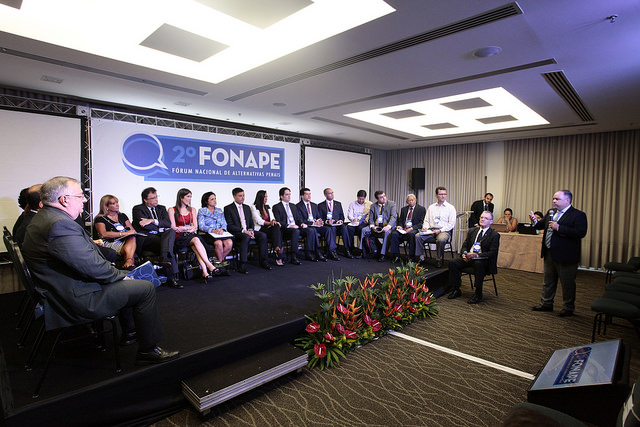
Over 600,000 people are in prison in Brazil, according to data from the Prison Studies Centre from June 2014. This makes it the country with the 4th largest prison population in the world, after the United States, China, and Russia. With about 202 million inhabitants, 301 people are incarcerated for every 100,000 Brazilians. And with an occupancy level of about 154%, the prisons in which they are held are very overcrowded.

The country’s prison population has grown exponentially in the last two decades. In 1995, 173,104 people were incarcerated, but in June 2014, 607,731 people were held in detention centers (in the prison system and police detention facilities): an increase of more than 350%.

The past decade demonstrates that increased incarceration produces no significant measurable effect on homicides. Over the last thirteen years, the national homicide rate remained virtually constant: 28.5 per 100,000 in 2002 and 27.0 in 2013 (the most recent data available). During that period, the incarceration rate continued to soar, from 122 per 100,000 inhabitants in 2002 to 301 in 2014. While no discernible reduction in homicides occurred, tens of thousands of families were destabilized and millions of Brazilian reais spent on incarceration.

Prisons impose enormous costs. On the imprisoned, on his or her family members who might depend on them for care and (financial) support, but also on the State. It is hard to calculate these costs exactly, but a number of studies in the United States have attempted to do so. However, it is important to note, first, that it is hard to make sound comparisons between countries because of methodological differences in the calculation of those costs, as well as because of a general absence of recent data. Moreover, the type of detention regime has an important impact on costs: logically, stricter security regimes are more expensive than lower-security settings. Lastly, richer countries have more money to spend on public institutions, including prisons, than poorer countries. This means that the monetary costs of the U.S. prison system do not necessarily reflect the situation in Latin America. However, it is fair to assume that the “collateral costs” of imprisonment are proportionately comparable.

This makes it relevant to note that in 2012, the Vera Institute calculated in The Price of Prisons that incarceration cost U.S. taxpayers about $39 billion per year—13.9% more than was reflected in the budgets of the 40 states that participated in the study. And the Pew Charitable Trusts found in 2010 that incarceration has a lasting negative economic impact on economic opportunity and mobility for inmates in the U.S., that those costs are largely borne by a person’s family and community, and that they reverberate across generations. Moreover, the Vera Institute’s The Human Toll of Jail provides an illustration of the impact of imprisonment, as well as the positive contributions that alternative sentencing can have.

Such studies are lacking in Brazil. Continue reading

Custody hearings lower rates of pretrial detention, but show structural problems in Brazilian criminal justice system

Pretrial detention should be an exceptional measure. According to the inter-American system of human rights (comprised of the Inter-American Commission on Human Rights, based in Washington, D.C., and the Inter-American Court on Human Rights based in San Jose, Costa Rica), States are only allowed to apply it for procedural purposes: when there is a risk that the defendant might flee (and the case might thus not be brought to justice), and/or where proceedings (such as the investigation of the case) might be affected. Even in such situations—which must be corroborated by facts, not suppositions—the application of pretrial detention must be necessary, limited, and proportional, and should be reviewed periodically. The mere existence of indications of guilt of the defendant is not sufficient for the application of pretrial detention.

However, despite the fact that these standards have been applicable for more than two decades, the Inter-American Commission on Human Rights concluded in its 2013 Report on the Use of Pretrial Detention in the Americas that the application of pretrial detention continues to be the norm, rather than the exception, in the region.

That is why it was good news when, just over a year ago (at the end of February 2015), the Brazilian National Judicial Council (CNJ) started a pilot project in the city of São Paulo to organize so-called custody hearings. The initiative was the result of a collaboration between the CNJ, the Ministry of Justice and a Brazilian NGO called IDDD (Instituto de Defesa do Direito de Defesa – Institute for the Defense of the Right to Defense), and aimed to apply international law, transform the criminal justice system, stimulate restorative justice approaches, and collect data about the impact of alternative sentencing in Brazil.

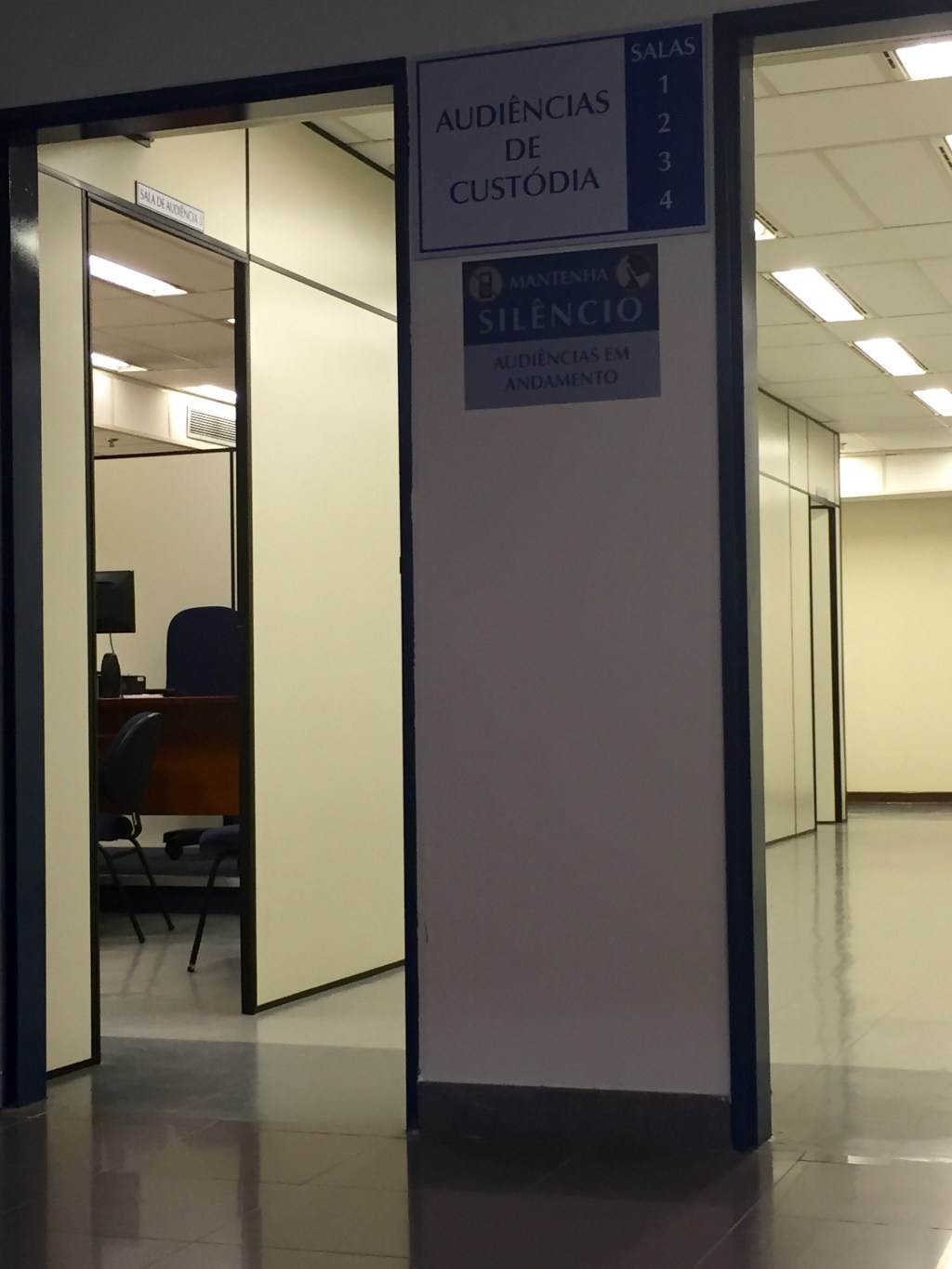
In custody hearings, people detained in flagrante delicto are brought before a judge within 24 hours. This includes cases in which a person can be linked to a crime relatively shortly after its occurrence. However, no time limits are given, so judges can interpret this provision broadly. The judge, after having heard the defendant, the public prosecutor, and the defense counsel (a public defender or a private lawyer), decides whether the defendant will be allowed to await trial in freedom (posting bail or complying with provisional measures), or whether pretrial detention will be applied.

The custody hearings are still in an initial phase—even though they have been implemented throughout the country, their coverage beyond state capitals and outside of normal working hours is still limited. However, in May 2016, all jurisdictions in the country are required to organize these hearings.

The Stanford Human Rights Center, together with graduate student Thiago Reis, is monitoring the impact of these custody hearings in the city of São Paulo. Brazilian human rights organizations, such as IDDD, Instituto Sou da Paz, and Conectas, do this at a larger scale.

The initial results of the custody hearings are promising. Continue reading

Guilty Verdict in Guatemala Trial on Sexual Slavery and Sexual Violence as Crimes Against Humanity

After almost a month-long trial, Judge Yassmin Barrios and her two colleagues on February 25 found two military officers guilty of crimes against humanity in the form of sexual violence, sexual slavery and domestic slavery against 11 Maya Q’eqchi’ women. The defendants, former Col. Esteelmer Francisco Reyes Girón and former military commissioner (local army representative in rural areas) Heriberto Valdez Asig, were sentenced to 120 and 240 years in prison, respectively. The first was also found guilty of the murder of Dominga Coc and her two young girls, while the second was also convicted of the forced disappearance of seven men, who were the husbands of the women. The defendants were convicted for both direct participation and for their roles as those in charge of the base.

As narrated in an earlier post, the case had its origins in the families’ efforts to establish legal title to their lands in eastern Guatemala. Local landlords called in the army, which treated the local population as “guerrillas,” detaining the men, who were never seen again. Once the men were captured and disappeared, the women were considered fair game. They were moved to the outskirts of the military base, where they were forced to take turns cooking, cleaning and being raped by soldiers. The judgment found that the victims’ accounts of the rapes, corroborated by former soldiers and men who had been imprisoned and tortured in the military base of Sepur Zarco, were credible and proved the elements of the crime.

Guatemala’s penal code art. 378 is a hybrid of crimes against humanity and war crimes, and includes “inhuman acts against a civilian population.” Earlier cases had established that unenumerated acts could constitute inhuman acts even if not explicitly described in the law, so long as they were criminalized in national or international law. The prosecution and civil complainants (a coalition of women’s groups) presented expert evidence on the criminal nature of sexual violence, sexual slavery and domestic slavery under international law, on the political roots of the crimes in land issues, on military structure and other themes.
At trial, the women covered their faces with traditional shawls to hide their identity. Supporters noted that the women had been subject to stigma and isolation when they returned to their communities, while defense lawyers tried to paint the women as prostitutes who were now seeking to cash in on reparations payments with the support of foreign NGOs. The judges would have none of it, recognizing the courage of the women “for appearing, testifying and publicly denouncing the multiple sexual attacks to which they were subject, which have undoubtedly left them with irreversible post-traumatic stress.” The judges found that the women were treated as war booty, and that the fact that they no longer had husbands made them available, in the eyes of the military, for any kind of abuse.
0b197ffc-afde-4014-85b7-818c0c6869b6_749_499“Acknowledging the truth helps to heal the wounds of the past and the application of justice is a right of the victims and helps strengthen the rule of law in our country, creating awareness that these types of crimes should not be repeated,” Judge Barrios declared.
This is the first case in a national court convicting military defendants for crimes of sexual violence and sexual slavery committed against their own citizens. As discussed here and here, international and internationalized criminal courts to date have been reluctant to, and not very good at, charging and proving these crimes, although upcoming cases may change that. It shows the importance of long-term work with groups of victims – one of the coalition of groups, ECAP – had been providing psychosocial help to the victims for over a decade. It brought together women’s groups (another of the civil complainant groups is called Women Transforming the World), groups working with indigenous women, and human rights groups. And it showed the importance of insisting on making national courts do their job, fighting impunity even under very difficult circumstances.


Four questions for MACCIH, OAS-backed anti-corruption body in Honduras

On Monday February 22, 2016, the Mission to Support the Fight against Corruption and Impunity in Honduras (MACCIH) officially presented itself in Honduras. MACCIH is a hybrid mechanism, backed by the Organization of American States (OAS), which was created to assist Honduran institutions tasked with the prevention of corruption and impunity. The establishment of MACCIH is a drastic measure; an admission that the Honduran State, for whatever reason, is unable to adequately investigate and punish corruption cases. But for those who have followed the situation in Honduras, this is no surprise.

The country suffered a coup d’état in June 2009, which further weakened Honduras’ already frail institutions. It caused a severe deterioration in the protection of human rights, and increased poverty and inequality. Violence shot up to 85.5 intentional homicides per 100,000 inhabitants in 2012, according to the National University’s Observatory of Violence (although the UN Office on Drugs and Crime even registered 90.4 intentional homicides that year).

Six years after the coup, the situation remains dire. According to a recently published report by the Inter-American Commission on Human Rights, Honduras continues to suffer from high levels of violence and organized crime, attacks on human rights defenders, militarization, growing inequality, and a lack of judicial independence. (And its highly criticized Supreme Court selection process does not bode well for the future.)

This situation is, unfortunately, not unique in the region. In the countries that compose the Northern Triangle of Central America—Guatemala, El Salvador and Honduras—levels of (organized) violence are high, government institutions are weak, and corruption and impunity are rampant.

Guatemala found its own way of attacking these problems. Following civil society initiative, the UN-backed International Commission against Impunity in Guatemala (CICIG) was created. After some eight years of operation that had ups and downs, CICIG has recently shown impressive results: it has rolled up crime rings run by notorious criminals and State officials, and has brought to light enormous corruption scandals, for example in the customs authority, in which the highest authorities of the country were involved. This led to the resignation of both the President and Vice-President, both of whom are currently imprisoned, awaiting trial.

The reactions in Guatemala’s neighboring countries were almost immediate: citizens in Mexico, El Salvador, and Honduras called for the creation of similar entities in their countries. However, governments have been reluctant to accede to these demands. No initiative has been taken in Mexico, and El Salvador has only agreed to a U.S.-sponsored anti-corruption program. But in Honduras, following a scandal that involved the embezzlement of social security funds (that were, moreover, allegedly used to finance the governing party), national protesters called for the establishment of an investigative body similar to CICIG, to take on corruption in the country.

On September 28, 2015, the Secretary General of the OAS and Honduran President Hernández announced the creation of MACCIH to assist Honduran institutions in preventing, investigating and punishing corruption. Continue reading

On the Job! Max Planck Group Leader in Bogotá, Colombia (deadline May 15)

The Max Planck Institute for Comparative Public Law and International Law (Heidelberg) and Universidad de los Andes (Bogotá, Colombia) are looking to hire a Principal Investigator to lead a newly established Max Planck Tandem Group in Transformations of Public Law. Other than research, responsibilities include supervision of two doctoral students at Universidad de Los Andes. There is no mandatory teaching load.

The Group will be located in Bogotá, and the Leader will be expected to reside in that city. The initiative will provide funding for at least one extended research stay per year of the Group at the Max Planck Institute for Comparative Public Law and International Law. Additional information may be found here. The deadline for applications is May 15th, 2016.

First national trial for sexual slavery as an international crime opens Feb.1 in Guatemala

On February 1, in a courtroom in Guatemala City, an historic trial will begin. Presiding Judge Yassmin Barrios – the same judge who presided over the Rios Montt genocide trial in 2013 – and her two colleagues will hear evidence against two former military officials for sexual violence, sexual slavery and domestic slavery as crimes against humanity. According to the Prosecutor, for up to six years Qek’chi Mayan women of rural communities were forced to take turns every two or three days washing, providing tortillas, cooking, cleaning and being raped at the military outpost of the community of Sepur Zarco, located on the border between the townships of Panzós and El Estor.  Fifteen of the survivors, backed by a coalition of women’s groups, brought a complaint in 2011 against the commander of the base, retired colonel Esteelmer Reyes Girón, and Heriberto Valdéz Asij, the former military commissioner (the Army’s local representative in rural areas) in the region. In addition to the crimes against humanity charges, Reyes is charged with murdering Dominga Coc and her two young daughters on the base. Valdez will face additional charges of forced disappearance.


The crimes were committed during the early 1980s, the height of the counter-insurgency war, although the women were forced to provide food for the soldiers until 1988 when the outpost closed. They originated, as many things do in Guatemala, with a struggle over land. The women’s husbands, worried that their lands had no formal title, began to push for security of tenure. The area near Panzós has long been a site of land struggles, including a 1978 massacre that many historians consider the beginning of the campaigns against the rural Mayan population. The response of local landowners was to call in the army, which killed or disappeared the men. Several months later, the army attacked their widows, burning down the houses, destroying their belongings, raping them, and forcing them to move right outside the military base. At that point, the “turns” in the military base began. A few of the women chose to flee, and lived for years in the mountains, suffering hunger and losing some or all of their children.

Continue reading

An academic New Year’s resolution for Colombia: understanding continued gendered violence as a threat to positive peace

Over the last decade, Colombia has been host to the world’s largest population of internally displaced people (IDP). In 2016, it is expected that the Colombian government and FARC will reach a peace agreement, marking the formal end of more than 50 years of civil war. It is widely recognized that this peace agreement will not resolve the immediate causes of displacement, but rather generate one kind of settlement in a context of longstanding and complex uses of violence. At present, contradictory tendencies seem to be at play: While periods of 2015 have seen the lowest levels of violence recorded on a national level since 1975, threats against civil society actors are increasing at an alarming rate.

As academics, we should be prepared to contribute to the development of a positive peace that amounts to more than the absence of armed conflict. We must continue to research, analyze and theorize violence against grassroots activists; in particular we must make sense of the type of gendered threats and gendered violence female activists are subjected to. From a socio-legal perspective, I think two challenges are particularly significant here.

First, that our theoretical tools for making sense of a violent post-conflict setting are underdeveloped. Existing theories of uses of law by social movements tend to be based on the legal cultures and institutions of industrialized liberal democracies.

In a recent article in Law and Society Review on IDP organizing in Colombia, Julieta Lemaitre and I argue that in violent contexts, mobilization frames are unstable and constantly shifting, resources tend to vanish, and political opportunities often imply considerable physical danger. In recent years, the legal and political conceptualization of the IDP situation as a humanitarian crisis has given way to a transitional justice frame. Yet, the challenges of violent context persist, with additional violence resulting from the ongoing land restitution process. We suggest that future research must pay attention to how legal mobilization in a social context that will most likely remain violent develops under a post-conflict legal regime, for various groups of women’s grassroots activists, including but not limited to displaced women.

Second, in particular, it will be necessary to do a better job of accounting specifically for the persistence of gendered violence and the ways it interlinks with grassroots women’s organizing. For example, Goldstein and Arias influential idea of “violent pluralism” as a mode of describing the Latin American and Colombian experience with conflict and violence is silent on the gendered realities of this violence.  In the post-conflict setting, we need to get a better understanding of political and legal mobilization in response to gendered violence; gendered violence as an obstacle to such political and legal mobilization; and how political and legal mobilization become the causes of gender-based violence.

Continued gendered violence will be a serious threat to positive peace. Taking the New Year’s resolution seriously involves figuring out what’s new, what’s old and which stories have not yet been told. In particular, it involves a commitment to resist the danger of (English-language) scholarly amnesia that often follows watershed moments like this type of peace agreement. It also includes being cognizant of the existing gaps in knowledge that are not going away with a peace agreement.

Happy Holidays.


For the life and health of my children: We MUST include Human Rights in the New Climate Accord

We humans have caused climate change, a real threat to humanity thus it requires human solutions.  We also have lost precious time on eternal discussions about the existence of climate change, despite imminent evidence.  Our efforts to deliver solutions must be inclusive and ambitious if they are to ensure that the lives and livelihoods of all people are protected.

If and how to include human rights protections in new climate accord was one of the primary issues discussed during October’s Bonn Climate Conference. These protections were notably left out of the no-text presented by the co-chairs, and then added back in at the insistence of several countries, many from the Global South, and hundreds of civil society organizations.

I could write a long list of legal, political, ethical, and economic arguments as to why human rights must be included in the Paris Agreement. In my opinion, however, they can all be distilled into two primary and powerful arguments: my children!

At 4 and nearly 2 years old, they are already experiencing the realities of a changing climate.  Some days, for example, they cannot go to the park because of increased air and climate pollution levels in Mexico City, be it black carbon or ozone, or both.  Unfortunately, the worst is yet to come, as hurricanes, droughts, floods, glacier loss, and fires are all increasing.

UntitledNow the question for my kids is not whether they will suffer from climate change, but to what extent.

Some may say I’m exaggerating, and that my kids aren’t among the most affected. They’re right.

Many others are suffering, and will continue to suffer, far worse consequences, such as: the Kunas in Panama, who are loosing their land due to sea-level rise; the 62 million people living on 52 small island states, including Tuvalu and Barbados; the 70 million people in the Andes, all of whom depend on water from glaciers and paramos, which are expected to dissapear within a few decades.

Despite the evident urgency, official responses have been shamefully slow. The United Nations recently announced that current national commitments aren’t enough to prevent world temperatures from surpassing 2oC by 2100, when my children will be 89 and 87 years old.

How, then, can we speed up agreements, increase ambition, and close the gap between what is needed and what is promised by States?

Human Rights are an important part of this answer. If implemented, they can help to:

  1. Recognize the realities of climate change and its impact on the enjoyment of human rights of all peoples, particularly those in vulnerable situations.
  2. Remind States of their existing obligations to protect and respect human rights, obligations which are fundamentally shared by corporations and other international entities. Incorporating human rights in the climate change agreement will not create new obligations; it will instead allow us to be consistent and comply with preexisting commitments.
  3. Avoid increased threats to world stability that have been linked to climate change due to impacts such as: local resource competition, livelihood insecurity, migration, extreme weather events and disasters, volatile food prices, transboundary water management, sea-level rise, coastal degradation, and the unintended effects of climate policies.
  4. Spur effective solutions, such as the rethinking of energy. These kinds of solutions haven’t yet been achieved due to a lack of ambition and political will.

For my son and daughter, and the millions of children of the world, we must accept that climate change is a human rights issue. For the health of future generations, and that of those already suffering from its impacts, we must do all we can to create effective solutions.

The new climate accord, which will be signed in Paris this December, must include human rights protections in its Preamble, as well as in its operative text. Only then, with an overarching respect for the rights of all people, can begin to see the results we need in the fight against climate change.

We must take the climate crisis seriously.

If not, we will be trapped in short-sighted negotiations that won’t provide my children the hope of a dignified and healthy life. They will be left inside, unable to play in the park, to enjoy the world beyond our doorstep. And those in more vulnerable situations may be left with nowhere at all to find the shelter they seek.