ECtHR’s Lost Opportunities in its Transformative Rulings: Queer Interpretation of Right to Privacy and Protection from Discrimination

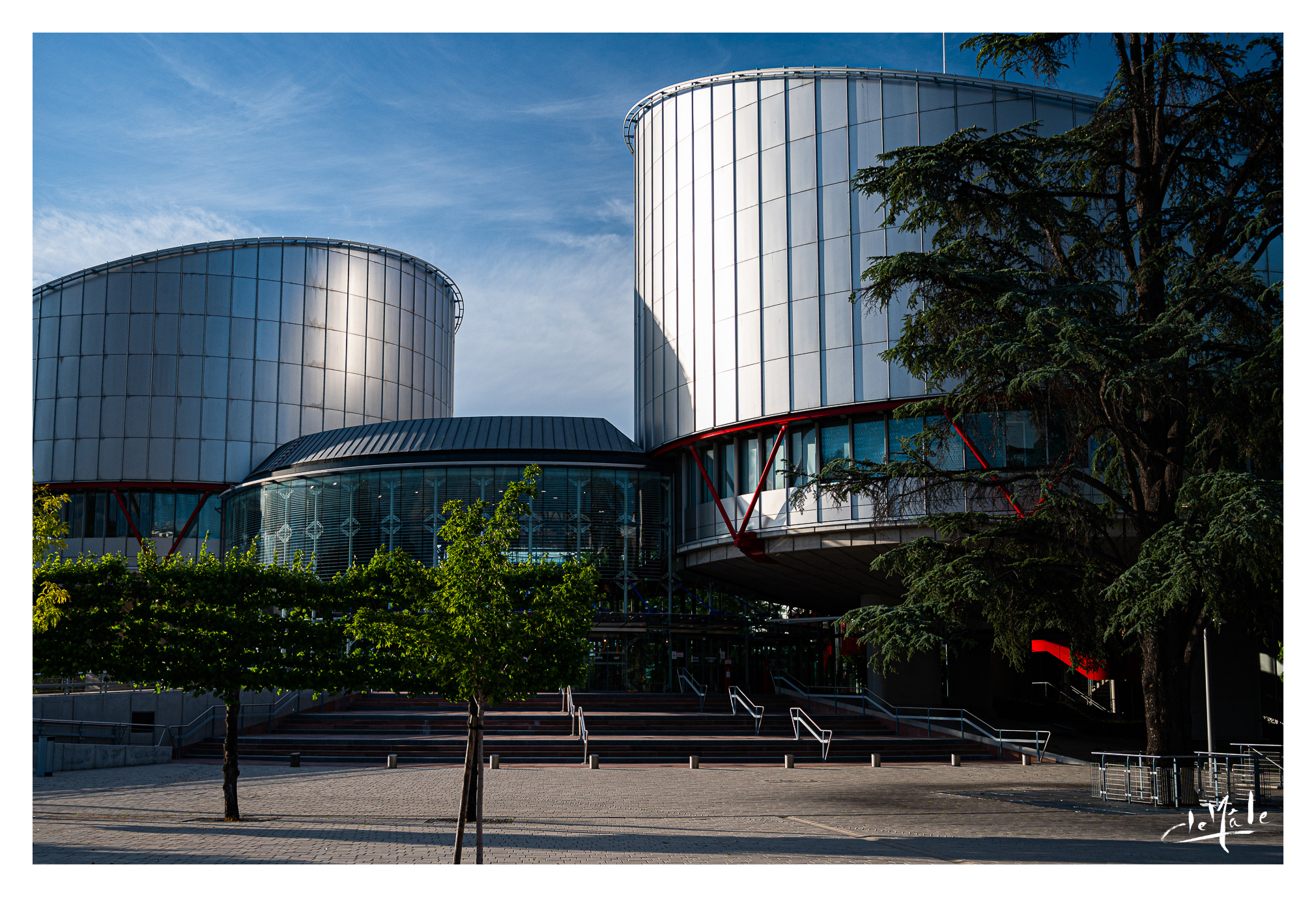
European Court of Human Rights © Christian Lemâle

Previous year the European Court of Human Rights [‘the Court’ or ‘ECtHR’] delivered some significant rulings strengthening ECtHR’s jurisprudence on Article 8 and Article 14 of the European Convention on Human Rights [‘Convention’] concerning Queer rights. The author in this article revisits three rulings of the ECtHR to argue that, nevertheless of being progressive rulings, the Court did fall short in addressing some major issues.

Firstly, in AM v. Russia, the Court ruled that Russian Court violated Trans individual’s rights under Article 8 read with Article 14 of the Convention by ending all contact between a trans woman and her children without a balanced and reasonable assertion of the legitimate interests [see here & here].

In the AM case, the Russian authorities and the applicant’s wife argued that the applicant is suffering from Transsexualism and further contended that the applicant’s intention to disclose her gender transition information to her children will impact their mental health and psychological development. This institutionalised prejudice of Russian authorities, nevertheless of ‘homosexuality propaganda law’ being held as unconstitutional in the state, exacerbates the ‘vicious wheel’ connected with prejudiced perceptions against trans individuals and a lack of education and awareness on Queer rights. The Court fails to address this elephant in the room, that how these prejudiced notions could impact the children’s education and perception about their parent’s gender identity.

When addressing the ‘best interests of the children’s, the Court had the chance to conceptualise the children’s right to non-discrimination on the grounds of their parents’ gender identity under Article 2 Convention on the Rights of the Child [‘CRC’], and the right to preserve personal relations and direct communication with both parents continuously under Article 9/3 CRC. Further, the UN Committee on the Rights of the Child General Comment no. 14 also stipulates their right to receive information on Queer Community challenges as well as gender identity and transition under Article 13 CRC and the right to education under Article 28 and, Article 29 of the CRC. Arguably, the ECtHR could have delved into significant length concerning the challenges with utilizing negative preconceptions about transgender individuals to rationalize restraining relationships and communication between transgender parents and their children.

In the second ruling, the Fedotova v. Russia, the Court ruled that Russia’s failure to provide same-sex couples with the opportunity to have their relationships formally acknowledged in form of a marriage, or in any other form is in violation of Article 8 & 10 [see here and here].

Nevertheless, the application was brought for recognition of same-sex marriage, the Court doesn’t feel adequate to discuss Article 12 [‘right to marry’] anywhere in the ruling. The Court concluded that the moral views of the majority cannot be used to deny sexual minorities access to forms of legal recognition. Taking reference from queer interpretations of the ECHR (here and here), which consider the inherent heteronormative (i.e. bi-genderism) notion of most of the Convention’s rights and how to transgress this dialectic. Regardless of the fact (which is still unclear), whether the applicant didn’t include Article 12 or not, the Court itself could have incorporated Article 12 of its own volition.

Not only Supreme Courts of other jurisdictions [the US and South Africa] but also the international institutions like Inter American Court of Human Rights [‘IACtHR’] have rejected the anti-majoritarian notion. It can be argued, that the Court’s rationale of Schalk and Kopf v. Austria, i.e. the appreciation of the majority opinion, remains viable. Furthermore, it can be argued that the ECtHR entirely embraces Article 12’s “heterosexual structure,” principally rendering the article inapplicable to same-sex relationships.

The second issue is the necessity of the non-discrimination principle under Article 14. The applicants did claim on Article 14, however, the Court concluded that it was not relevant because it heretofore ruled the violation of Article 8. Since Dudgeon v. UK, it has been a well-established tenet of the ECtHR that rules that discrimination does not need to be investigated if it is not “a crucial element of the case“. It is unrealistic to contend that the lack of legal recognition does not have a severe discriminatory intent in a nation where same-sex individuals are continuously stigmatised and marginalised, where even the Constitutional Court supported the law on prohibition on “homosexuality propaganda.”

Lastly, in the  X v. Poland case, the Court ruled that there had been a violation of Articles 8 and 14 of the Convention after the domestic courts had refused to grant custody of the child on the grounds of the mother’s sexual orientation [on mother’s relationship with another woman].

Nevertheless, the observations that the Court concluded in its rationale, which was first observed in the Hoffmann v. Austria and have been repetitively reaffirmed in many of its rulings about allegations of discriminatory treatment against divorced parents, the Court overlooked an outstanding opportunity to state unequivocally that a parent’s sexual orientation does not influence their parental capabilities. The Court could have gone a step forward like it did in Vojnity v. Hungary, where the Court made clear that parents’ religious beliefs per se cannot influence their capacity to raise their children.

In Atala Riffo v. Chile, the IACtHR concluded that the Chilean Courts’ judgement to take children from their homosexual mother’s custody based on her sexual orientation was discriminatory, emphasising that ‘an abstract reference to the child’s best interest… without specific proof of the risks or damage to children that could result from the mother’s sexual orientation’ is not acceptable’

What is more disappointing is that the third-party intervention also highlighted Poland inequalities and prejudices in legal and practical matters concerning rainbow families and the attitude towards the Queer community being negative and Queerphobic. Later, the same was also emphasized by Judge Wojtyczek in his dissenting opinion. However, the Court still neglected to address this concern.

Conclusion: The Test Continues

These judgements are undoubtedly significant and are progressive in protecting trans parents’ rights, same-sex marriage recognition and discrimination on gender identity & sexual orientation. The author doesn’t question their contribution, however, the abovementioned arguments do signify the ECtHR’s inherent narrow approach in Queer Interpretation of Article 8 and 14. The ECtHR’s upcoming opportunities here, here and here, will further demonstrate the extent to which the Court is inclined to tread unprecedented ground in terms of acknowledging rainbow family relationships.

Hilary Charlesworth elected to International Court of Justice

Delighted to report that the UN General Assembly and UN Security Council today elected Hilary Charlesworth to the International Court of Justice, to fill the seat prematurely vacated due to the untimely death of James Crawford (see previous IntLawGrrls post here). The appointment, which takes immediate effect, brings to four the number of women sitting on the 15-judge court.

>> Heartfelt congratulations, Hilary! <<

Question for the UN Human Rights Council: So, should only men apply?

At its session concluded earlier this month, the UN Human Rights Council established two new country rapporteurships, one on Afghanistan, and one on Burundi.  The call for applicants has now been posted. However, even before any applications have been collected and reviewed, the Office of the High Commissioner for Human Rights seems to have already decided that both appointees will be men, based on the Name of Mandate-holder column (click screen shot below to enlarge). They’ve done this for the two thematic mandate openings, as well.

UPDATE on 29 October 2021: I see that today the OHCHR has now fixed this issue on the country rapporteur page by removing the “Mr.” from the two open positions in the Mandate-holder column, and on the thematic rapporteur page it has removed the “Mr.” from this column for the newly-created thematic rapporteurship on climate change, but has still left in place the “Mr.” in the opening on the Working Group of Experts on People of African Descent.

FURTHER UPDATE, 5 November 2021: The OHCHR has now removed the remaining “Mr.” from the vacancy listing in the Mandate-holder column on the thematic procedures webpage.

Event Tuesday 26 October: Mixing Cultures is a Human Right

An impressive line-up of speakers is scheduled to discuss a human rights approach to cultural mixing at a side event on Tuesday 26 October for the final report of UN Special Rapporteur in the field of cultural rights, Karima Bennoune, in an event co-organized with the Coalition for Religious Equality and Inclusive Development (CREID).

Tuesday 26 October 2021  |  12.00-13.30 EST  |  17.00-18.30 BST

Faced with rising claims about monolithic cultures and cultural “purity” around the world, and with rising threats in many contexts, whether of the destruction of the cultural diversity of Afghanistan or the erasure of mixed identities in Japan, the speakers will address how those who value rights-respecting cultural openness and hybridity can defend these practices. How can we preserve histories of cultural mixing in the past and ensure their possibilities in the present and future so as to protect cultural rights for all?

Link to Report and to Annex with the legal framework on cultural mixing and mixed cultural identities.

Link to report press release: Mixing Cultures is a Human Right

SPEAKERS

Karima Bennoune, UN Special Rapporteur in the field of cultural rights and Visiting Professor, University of Michigan Law School (Algeria/USA)

Wole Soyinka, Writer, Winner of the Nobel Prize for Literature, 1986 (Nigeria)

Omaid Sharifi, Artivist and Co-Founder, ArtLords (Afghanistan)

Pragna Patel, Founder and Director, Southall Black Sisters (UK)

Hiroko Tsuboi-Friedman, UNESCO 2005 Convention on the Protection and Promotion of the Diversity of Cultural Expressions Expert Facility member (Japan)

Mariz Tadros, Director of the Coalition for Religious Equality and Inclusive Development and Professor of Politics and Development at the Institute of Development Studies (Egypt/UK)

>>> Register here. <<<

This event is co-sponsored by:

Donia Human Rights Center
Feminist Dissent
Southall Black Sisters
Artists at Risk Connection
PEN America

Hilary Charlesworth nominated to International Court of Justice

Delighted to see that Australia has nominated Hilary Charlesworth for election to the International Court of Justice.  The election will take place on November 5, 2021, for the seat that opened upon the untimely passing in May 2021 of James Crawford, whose term was to end in 2024.

Hilary Charlesworth, the Harrison Moore Chair in Law and Laureate Professor at Melbourne Law School and a Distinguished Professor at Australian National University, served on the ICJ as judge ad hoc for Australia in Whaling in the Antarctic (Australia v. Japan) (2011-2014), and is currently serving as judge ad hoc for Guyana in Arbitral Award of 3 October 1899 (Guyana v. Venezuela)

Photo from the ILG2 post, Women of the ICJ: Judge Xue Hanqin (China), Judge ad hoc Hilary Charlesworth (Australia), Judge Joan E. Donoghue (USA) and Judge Julia Sebutinde (Uganda), next to a portrait of Judge Rosalyn Higgins (Great Britain), the first woman to serve on the ICJ.

Hilary has twice been recognized for her accomplishments by the American Society of International Law, receiving the award for “preeminent contribution to creative scholarship” with Christine Chinkin for the book they co-authored, The Boundaries of International Law: A Feminist Analysis, as well as the Goler Teal Butcher Award, together with Prof. Chinkin, “for outstanding contributions to the development or effective realization of international human rights law.” In 2021 she received the Distinguished Scholar Award from the International Studies Association, and was previously awarded an Honorary Doctorate by the Université Catholique de Louvain in Belgium.

Hilary Charlesworth has been a member of the Executive Council of both the Asian Society of International Law and the American Society of International Law, and served as President of the Australian and New Zealand Society of International Law. She has been a visiting professor at a number of institutions including Harvard, Columbia, New York University, Michigan, UCLA, Paris I and the London School of Economics, and has delivered the General Course in Public International Law at the Hague Academy. 

Hilary is also a fellow IntLawGrrl (her ILG profile here).  In 2012 she and her co-authors Christine Chinkin and Shelley Wright shared their reflections as they looked back on their pathbreaking article, “Feminist Approaches to International Law,” 85 American Journal of International Law 613-645 (October 1991). Their post capped a fascinating month-long IntLawGrrls series on the work.

Heartfelt congratulations on the nomination, Hilary!

Migrant Worker Women Advancing Gender Equity through the USMCA

Men only, 1835 years old. 

In 2021, seeing a job posting with those words is startling. Shocking even. But more than a year into a world-changing pandemic that has pushed millions of women out of paid work, U.S. employers continue to discriminate against women, posting ads like that one. To evade legal consequences, U.S. businesses discriminate in Mexico, hiring men to work in the United States with temporary H-2 guestworker visas while turning women away. Other U.S. businesses discriminate by hiring women but channeling them into lower-paying jobs with poorer conditions than those they hire men for. Although the U.S. government knows that H-2 employers discriminate against women, it has done little to stop them. 

For more than fifteen years, since I founded Centro de los Derechos del Migrante, Inc. (CDM)—the first transnational workers’ rights organization based in Mexico and the United States—I have heard from women in Mexico about patterns of abuse in the U.S. H-2 programs. Migrant women have courageously spoken out about blatant discrimination in H-2 recruitment and hiring, sexual harassment and other violence against women at work, unfair pay, and unlawful working conditions. Women report discrimination in industries ranging from Maryland’s blue crab processors to fruit and vegetable sorting. Sex discrimination persists in H-2 labor supply chains even though U.S. law prohibits employers and labor recruiters from discriminating against women. Laws prohibiting discrimination protect all women who work in the United States, even if businesses hire them outside of the country.

Today, migrant women continue the fight for gender justice. In March, in honor of Women’s History Month, CDM and workers’ rights organizations across North America joined migrant women in filing the first viable state-to-state complaint under the new United States-Mexico-Canada trade agreement (USMCA). The USMCA’s labor chapter, Article 23, requires the United States to enforce its anti-discrimination laws, including Title VII of the Civil Rights Act of 1964. In failing to root out discrimination in H-2 recruiting, hiring, and employment and neglecting to ensure gender equity in the program, the United States is violating Article 23. 

In the complaint, we collectively make three demands:

  1. The U.S. government must end sex discrimination in the H-2 guestworker programs once and for all.
  2. The government must ensure that all workers have access to Legal Services Corporation-funded civil legal services. (Without lawyers working in solidarity with them, it is nearly impossible for migrant women to access justice through U.S. courts.)
  3. The government must investigate discrimination complaints from women in the H-2 program under Title VII of the Civil Rights Act, rather than ignoring or summarily dismissing them.

And to increase pressure on the Administration, we are filing a supplemental complaint with Professor Sarah Paoletti, a Practice Professor of Law and the Director of the Transnational Legal Clinic at the University of Pennsylvania School of Law. The supplement will address the U.S. government’s obligations under the ILO and international human rights law to end discrimination in the H-2 program.

We have reasons to be hopeful that the USMCA can serve as a tool to improve access to transnational justice for migrant workers. Unlike NAFTA—the old trade agreement with its toothless labor side accord—the USMCA has a mechanism for migrant workers and their advocates to push governments to comply with labor and employment laws—or face sanctions. Concretely, this means that the U.S. government may face sanctions if it maintains the status quo and ignores the grave abuses that the petitioners report in the H-2 program. It means that the U.S. Equal Employment Opportunity Commission must end its practice of failing to investigate and meaningfully respond to migrant women’s discrimination complaints. And it means that the U.S. Departments of Labor and Homeland Security must stop allowing H-2 employers to discriminate without consequences. In receiving and reviewing our petition, the governments are legally responsible for showing us that they meant what they said about protecting migrant workers’ and women’s rights when they signed the agreement. 

The historic process for the migrant women petitioners began in Mexico, where we filed the USMCA complaint with the Mexican government. Mexico formally accepted the complaint and is now investigating discrimination and other abuses in the agricultural and protein processing industries, the industries in which the petitioners work. Earlier this month, Mexico asked the United States to honor its obligations under the USMCA and invited cooperation in doing so. And now the Biden-Harris Administration has the opportunity to make good on the promise of the USMCA and proactively address the urgent issues we raise in the complaint.

For too long, U.S. businesses have used the H-2 programs to bypass our civil rights and labor laws. Left without government oversight, H-2 employers have enacted their sexist, racist, and ageist ideas about the kinds of workers who maximize profitability. Sex discrimination in the H-2 program harms not only migrant women from Mexico but also U.S.-based workers. 

Over the next year, as we rebuild the U.S. economy for a sustainable and equitable recovery, justice for migrant women must be at the fore of the government’s labor and employment policies and practices. And next Women’s History Month, we look forward to celebrating meaningful, sustainable reforms in the H-2 program that will end discrimination against migrant women and promote access to justice. 

We would be grateful for your support in standing with migrant worker women to fight against discrimination. Please email me (rachel@cdmigrante.org) to join the supplemental complaint on the U.S. government’s obligations under the ILO or to submit an amicus in support of migrant worker women. 

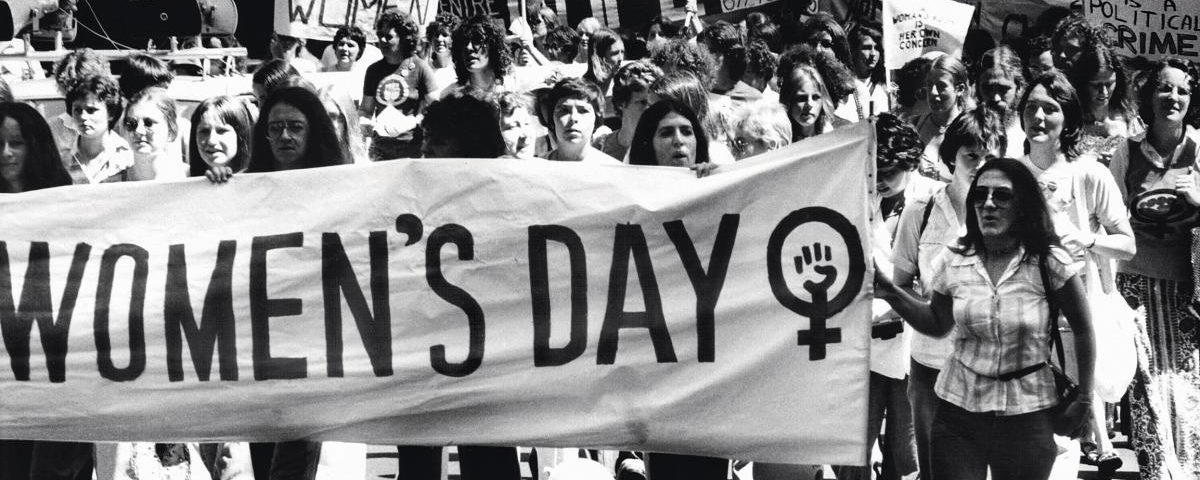
Violence, Justice, Equity: Reflections on International Women’s Day

On this International Women’s Day (IWD), the official UN theme for 2021 is “women in leadership: achieving an equal future in a COVID-19 world.” The elimination of discrimination and violence against women and girls are targets of the Millennium Development Goals and the UN Agenda 2030, which emphasizes inclusivity in its Sustainable Development Goals (SDGs), including gender equality and the empowerment of all females in Goal 5. Goal 10 aims to reduce gender and socioeconomic inequalities globally, including through the elimination of discrimination, violence, exploitation, forced marriage, and female genital mutilation.

Dating back to the first celebration in 1909 in the United States, IWD is rooted in socialist women’s leadership in struggles for labor and economic justice, such as the 8-hour workday and limits on women’s and children’s labor; political justice, such as suffrage and liberation from fascism and autocracy; a refusal to sacrifice husbands and children to wars; and breaking down false barriers between “public” and “private” life that conceal the important roles of mothers and wives. Women’s efforts against poverty and violence have also been consistent IWD themes, including the structural violence of female subordination—“a tolerance of violence against women and children” and being “subjected to a life of sub-humanity for the sheer fact alone that they were born female,” as noted on IWD 2012.

To imagine a gender-equitable future from this historical moment in 2021 requires reckoning with how women and girls have been faring. For instance, since the start of the pandemic in the US women—disproportionately women of color—have left the work force at four times the rate of men, reversing previous gains. One of the more well-known outcomes of the COVID-19 pandemic is the escalation of domestic violence and sexual and gender-based violence (SGBV), triggered by prolonged social isolation, household tension in close quarters, and increasing strains on individuals and families due to deteriorating health, socio-economic, and/or political conditions. The “Forever Wars” and other conflicts around the world have also raged on during the pandemic, adding to the world’s refugee crisis in which 75-80% of displaced persons are women and children. Trauma is understandably a common preoccupation of our time.

Working at the intersection of human rights and trauma mental health, I have spent the last year writing about SGBV and trauma-informed approaches to interviewing female survivors for purposes of investigating human rights violations such as genocide, crimes against humanity, war crimes, and mass detention of people seeking refuge from violence and poverty. Among multiple things competing for our attention, mine has been focused intensely on militarism, conflict-related SGBV, impunity, and feminist activism amidst growing societal & global inequities and increasing violence in many forms—criminal, sexual, domestic, and political—during the pandemic. In the ongoing and escalating struggle for gender justice, urgent attention to violence remains important. Among the types of violence and harm SGBV stands out for several reasons. It is the only serious crime for which many justice systems require victims to prove lack of consent to the harm inflicted. Across diverse legal systems, redress for SGBV is difficult to attain due to attribution of blame and complicity to victims/survivors as well as impunity for perpetrators. SGBV has also historically been the least punished offense committed during wartime.

In the long history of international feminist activism, it is only recently that women’s efforts led to the recognition of conflict-related SGBV as a war crime against the long-standing idea that sexual violence against women, girls, men, and boys is an expected military reward or byproduct of war. Women’s campaigning for redress of this injustice, through UN human rights and women’s rights conferences and particularly since the 1990s International Tribunals for Rwanda and the Former Yugoslavia, resulted in its designation as a crime against humanity. “From time immemorial, rape has been regarded as spoils of war. Now it will be considered a war crime,” said Judge Pillay of the International Criminal Tribunal for Rwanda (later, the UN High Commissioner for Human Rights).

However, all forms of SGBV persist, supported by strong ideological underpinnings: state-supported violence, militarized masculinity, and victim-blaming alongside perpetrator impunity. These thrive in a broader context of social, economic, civil, and political inequities. SGBV is founded on sexist beliefs and compounded by other structural inequalities in the context of globalized discourses of militarized masculinity that merge sex and violence, and which are amplified through warfare. The globally pervasive threat of SGBV reduces the quality of life for targeted persons—disproportionately women, girls, and gender non-conforming persons—and is particularly acute in hyper-masculinist institutions in which sexual assault rates are often highest, such as in militaries. Conflict-related SGBV inflicts collective trauma by systematically targeting individual bodies in furtherance of broader social harms such as the mass displacement, dispossession, and extermination of entire neighborhoods and communities. Female survivors of conflict-related SGBV have reported feelings of complete insecurity and multiple losses: bodily integrity, health, loss of family and their livelihoods, disorientation and lack of belonging, profound dispossession of their personal identity, and marginalization.

Continue reading

The next step for the International Criminal Court: Mandatory trainings on sexual and gender-based crimes for all judges

In a report published on September 30, 2020, the Independent Expert Review (IER) raised their concern “about the possible lack of experience, knowledge and interest in international criminal law of some judges”. The same day, the Advisory Committee on the Nomination of Judges (ACN) also released its report, evaluating the suitability of the nominees for the position. A few days later, candidates’ answers to a questionnaire prepared by States Parties were shared. In analysing those different documents, we noticed that several judicial nominees generally lacked experience and/or understanding of what sexual and gender-based crime (SGBC) entailed.

We therefore welcome the IER’s recommendation R174 that the “Presidency should design and organise a compulsory, intensive and comprehensive Induction Programme of sufficient duration for new Judges” that would be tailored to each judge and cover SGBC. The same holds true for the Continuing Professional Development Programme, also proposed in the report. It is now for the Assembly of States Parties (ASP) to make these written recommendations a concrete reality that will be beneficial not only for the Court, but also first and foremost for SGBC victims and affected communities.

This post explains the reasons why we need to have a Bench that has experience in and knowledge of SGBC. It supports the call for mandatory training of judges on this subject.

1. The Imperative: Rights of the victims and Quality of the decisions

The Rome Statute is a progressive instrument offering the necessary tools to put an end to the impunity of SGBC. What we now need are judges who know how to use this tool effectively.

However, this year’s list of candidates speaks for itself: out of the twenty candidates, twelve claimed to have experience handling SGBC cases. From those twelve, five seemed to understand SGBC from the limited prism of domestic violence against women and/or children, or that sexual violence occurs against women; their answers utterly failed to explicitly acknowledge that men and boys could also be victims of SGBC. Only four candidates demonstrated experience in dealing with gender-based violence.   

This is problematic. Judges should hold a basic knowledge of SGBC for, at least, two reasons: to uphold victims’ rights and maintain the quality of the decisions.

The Rome Statute is unequivocal: victims should be put at the centre of ICC proceedings. However, when victims of SGBC face a Bench that has no prior experience or knowledge of SGBC, their right to participate is affected. First, judges play an essential role in ensuring that victims do not suffer from secondary victimisation during the proceedings. Second, as shown in the ICC’s first reparation case (Lubanga), a Bench that lacks a gender perspective and understanding of SGBC is more at risk of making reparation orders that will fail to be effective for and inclusive of SGBC victims.

The lack of knowledge regarding SGBC may also undermine the legitimacy of the Court and the quality of its rulings. The ICC has already been criticised for its decisions that lacked a sensitisation to SGBC (see here and here). While the onus for including SGBC in criminal charges  is on the Office of the Prosecutor (OTP), a Bench that does not have a knowledge of SGBC or is tainted by stereotypes will certainly not contribute to the successful prosecution of these crimes. This affects the entire proceedings, from the confirmation of the charges (see Bemba, Katanga and Ngudjolo cases where charges of SGBC were not confirmed due to the judges’ misunderstanding) to the sentencing  (see Judge Odio Benito dissenting opinion  on her colleagues’ failure to consider sexual violence).

2. The solution: Providing mandatory training for judges on SGBC

The candidates’ lack of knowledge and expertise related to SGBC is deeply problematic considering that, if elected, they are likely to rule over cases of SGBC during their nine-year mandate. In its 2019 report on preliminary examination activities, out of the nine situations that were under examination by the OTP, eight were situations where the OTP had a reasonable basis to believe SGBC had been committed.

We support the call for mandatory judicial training on SGBC at the ICC. Its importance cannot be overstated. The International Organisation for Judicial Training emphasised that judicial training is “essential to ensure high standards of competence and performance”. Even the ICC Code of Judicial Ethics calls on judges to take “reasonable steps to maintain and enhance the knowledge, skills and personal qualities necessary for judicial office”. And, although mandatory training was not a topic addressed by the ACN, it still formed part of the many issues addressed by the IER report (see para.417 of the report).

As explained by the Justice Initiative in June 2020, “the ICC presents a new, unfamiliar legal framework for most incoming judges”. The IER also reported that the ICC “has many distinctive features not repeated elsewhere”. Newly elected judges may not be familiar with the Rome Statute system, as it is one of a kindthe possibility to adjudicate gender-based crimes being an example of its peculiarity.

The Paris Declaration of 2017 advocates for the training of international judges. In several countries (e.g., Canada, the US, Malawi and the UK), judicial trainings are attended by judges. Belgium’s awareness of the lack of its judiciary’s knowledge on sexual violence even led to the adoption of a law making it mandatory for judges to partake in training on sexual violence.  The ICC must follow this practice and organise mandatory trainings on SGBC for its judiciary.

***

We understand that some judges may be resistant to the idea of receiving judicial training. Some of them might “find continuing professional development an anathema to the standing of a judge of an international criminal court” as noted by the IER. However, in an era where SGBC is a clear component of armed conflicts, the poor record of successful prosecution of SGBC before the ICC is no longer acceptable—especially when part of the solution could come simply from a better understanding from the Bench. This is a fair and necessary requirement for those who want to serve on the criminal court that the whole world has its eye on (for better or worse).

Look Into the Future of the WTO: Illuminate and Implement Inclusivity, Diversity and Equality

The most recent WTO Director-General (DG), Roberto Azevêdo, stepped down on August 31, 2020. Consequently, the new – and the first female – WTO DG will be decided in November 2020. On October 8, 2020, the final two candidates were publicized after two rounds of DG selection process. They are two of the three women candidates (Nigeria’s Ngozi Okonjo-Iweala, South Korea’s Yoo Myung-hee and Kenya’s Amina Mohamed) advanced in the selection. Candidates from Nigeria and South Korea remain to contest in the final round scheduled in late October 2020. This future women leadership appointment is believed and moreover expected to reflect and pivot significances in inclusivity, diversity and equality in the WTO. Discussion on the importance of these measures has taken place in intense and meaningful ways since summer. For example, Maria V. Sokolova, Alisa DiCaprio and Nicole Bivens Collinson have already written a piece titled ‘Is it time for women leaders in international organizations?’. They address four main issues concerning trade tensions, sustainability, inclusion and digitalization in international organizations. In their conclusion, they suggest all nations to consider the role of women leaders and their abilities, considering upcoming challenging issues in international trade and women’s proved ability to handle difficult tasks. Building from this compelling work of Sokolova et al, this blog post is focused on illuminating and implementing inclusivity, diversity and equality by ways of adopting women’s leadership and participation in the WTO’s future.

First of all, inclusivity is described as a priority of the WTO. Since 1947 when the General Agreement on Tariffs and Trade (GATT) was established, all DGs of the GATT and its successor, WTO, have been men. During the GATT period, only 5% of the 168 ad hoc panelists were women. Inclusivity of women in the dispute settlement mechanism of the WTO improved – approximately 43% of the total number of panels were women. Moreover, 5 of the total 25 Appellate Body members were women. Nevertheless, only 3 women have chaired the Appellate Body.

While this year, women leaders are found to better deal with pandemic crisis, a female leader of the WTO can bring about resilience, positive changes and problem-solve capability in post-COVID times than previous DG. Looking back at the economic crisis in 2008, some academic commentators articulated that if women were leaders in the financial sectors, the crisis could have been prevented. For example, in 2014, Irene van Staveren published ‘The Lehman Sisters Hypothesis’ on Cambridge Journal of Economics. In particular, various studies indicate that it is reasonable to expect differences made by women leaderships in effective decision-making process and clearer communication in complex international and foreign affairs.

On a further point about women’s inclusivity, this blog post suggests WTO member states, including both developed and developing countries, to include more women to participate in international trade law and policy. A bottom-up approach might be effective. This advised approach entails providing opportunities and training to more girls and women to be trade delegates, negotiators, trade lawyers and scholars. Moreover, it helps to re-design curriculum of international trade law in higher education institutions to highlight gender inclusivity and to deepen cooperation between different gender categories. It is also helpful to appoint more women in leading roles in cross-border firms in international trade and associated non-governmental organizations. Furthermore, in WTO member states’ domestic law and policy implementation, this blog post advocates states to offer specific support, such as assisting women candidates to engage in local politics or to work for governments, to develop a more friendly political environment.

Secondly, ethnic diversity is on the agenda of trade promotion in the WTO. Looking at previous appointments of DG of the GATT and WTO, more than half of the previous 9 male leaders are from developed economies, such as Pascal Lamy (2005-2013) from France, Eric Wyndham-White (1948-1968) from the UK, and Mike Moore (1999-2002) from New Zealand. Whether the Nigerian candidate or the South Korean candidate, the new female DG of the WTO will represent developing economies and project a new voice to open an unprecedented chapter in post-pandemic era. This is particularly inspiring and welcome news, since for many years, the WTO has been criticized for its deficiency in promoting the interests of the least developed countries and developing countries in international trade. Moreover, the impact of COVID-19 trade disruptions on women in least developed countries is negative in significant ways. As a result, it is anticipated that the next DG of the WTO, who is from less advanced economies, will be a champion for diversity, respecting ethnicity and developmental issues.

Finally and more importantly, gender equality as enshrined in UN Sustainable Development Goals (SDGs) still has to be implemented after strengthening women’s inclusivity and diversity in the WTO and other international organizations. Recently, World Bank and the WTO co-published a report, which assesses the role of international trade to promote gender equality. This blog post emphasizes key and valuable points in this publication. Firstly, the evolving nature of trade produces opportunities for women, and we should create accessible channels for women to make most of these opportunities. The digital economy and the service economy are both remarkable examples since they provide an inclusive growth and gender friendly employment. Secondly, better trade policies will benefit women. We should continue working on breaking down women’s barriers to trade, especially vulnerable women and/or women in least developed countries and developing countries.

To conclude, having an increased number of women to take part in leading and/or participating in international trade is undeniably significant. Appointment of a new female DG of the WTO is a good start and enables us to establish and look into a more inclusive, diverse and equal future.

The Black and White Campaign in Turkey and its Repercussions Amidst Rising Femicides and an Increasing Hostility Towards the Istanbul Convention

Pinar Gültekin a 27-year-old University student was brutally beaten and burned to a crisp by her ex-boyfriend on 21stJuly 2020 in Turkey adding to the country’s long list of femicides. The victim was reported missing for six days before being found dumped in a bin strangled to death by her former partner for disagreeing to reconcile with him. 

While the news of Gültekin’s death ignited demonstrations all across the country and women and men alike took to the street’s, the death of Pinar and similar atrocities against women in Turkey inevitably raises a few questions. What should happen when a 27-year-old girl is strangled to death and burned to a crisp by her ex-partner? What are the repercussions of a mother being stabbed to death by her husband in a café in front of her child? What happens when a girl is stabbed and burned to her death because she resists rape? What happens when the mysterious death of an eleven-year-old girl is deemed “suicide” by the judiciary. Maybe the answer to the above-mentioned questions lies not in what happens but how it happened or who/what perpetrated the incidents. While the atrocities may be perceived by some as interpersonal their prevalence only against a particular section of the community indicates towards an institutionalisation of violence abetted by a chauvinist patriarchal society. 

Violence against women existed long before the expression “femicide” was devised in 1976 by Diana E. Russell at the first “International Tribunal on Crimes Against Women in Brussels, Belgium”. While the term is defined by the “United Nations Office in Drugs and Crime”as the gender-based homicide of women it not just refers to the killing of women but condones an entire system of Judicial administration that fails to safeguard the women and prosecute the perpetrators. The concept is similar to “rape culture” except applying only in cases of murder concerning a women’s sexual orientation, indigenous identity, dowry-related issues. However, contrary to majority perception the acts under no circumstances are unrelated and spasmodic but is abetted by a chauvinistic society exhibiting unequal power structures and conventionally defined gender roles where women often find themselves pushed to the margins. Encouraged by Right-Wing Populist Parties the above-mentioned manifestations of violence against women in Turkey has increased exponentially over the decades.

The misogynistic heteronormative dogmas embedded in the social fabric of Turkey gets exemplified by the Global Study on Homicide, 2018 conducted by the “United Nations Office on Drugs and Crime” which reportedly delineated the death of 89,000 women in Turkey in 2017. Turkey has been ranked114 of 167 countries in the “Women, Peace and Security Index, 2019” and 130thof 149 countriesin “WEF’s the Global Gender Gap Index, 2020”. The data is at face value enough to glean the status and treatment of women in the country. 

Read More