Cross-posted courtesy of the Oxford Human Rights Hub.
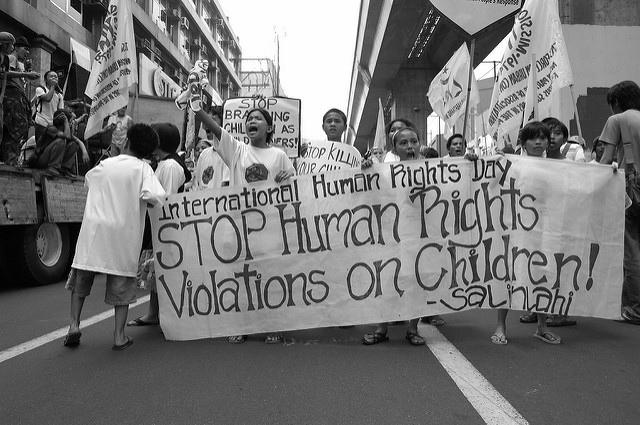
The act of peacemaking may be viewed as the promise of a new beginning. It is latent within the sui generis legal form of the self-constituting process, and the often layered human rights transformation at its substantive epicentre. In the complex and evolving legality that constitutes peacemaking, international human rights claims often have heightened performativity. Or in other words, international human rights law (itself born of international peacemaking processes) is both applicable to, and performative within, the self constituting process of peacemaking. However, the layered human rights transformation is often partial: children and their rights are particularly likely to be invisible in the successive processes and agreements that constitute peacemaking. Yet, there is an international legal obligation to respect and ensure their rights ‘in’ and ‘through’ peacemaking, as affirmed by the Committee on the Rights of the Child and underwritten by the Security Council. Further, as noted in an earlier posting, peacemakers may for multifarious reasons — some principled, others political — commit to ‘transforming children’s rights as part of human rights’. So, why, then, are children mostly invisible in peacemaking? Continue reading