
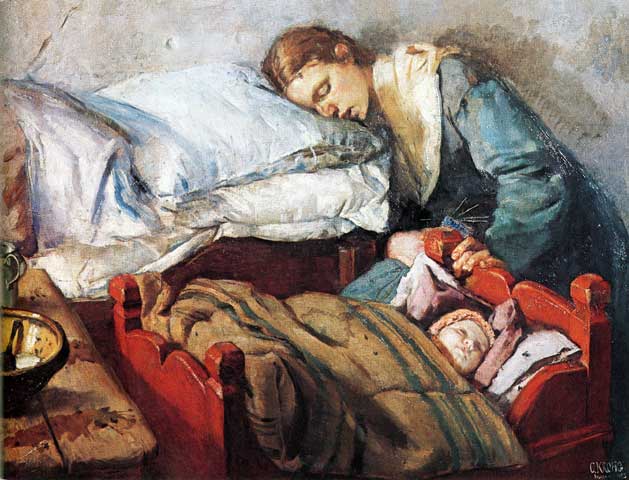
Discussions related to reproductive justice often focus on forced pregnancy, forced birth and the right to abortion as healthcare. What is often overlooked, particularly related to child marriage, is the concept of forced parenthood, or forced motherhood. Feminist theory has long treated motherhood as a politically significant category, particularly within feminist peace literature, which frequently grounds women’s peace work in maternal identity. For Ruddick, maternal thinking arises from practice and generates epistemic and moral commitments that may support a politics of peace. Unfortunately, feminist peace theory often fails to account for how race, class, and proximity to institutional violence shape maternal work, producing an incomplete understanding of the relationship between motherhood and peace.
When applied to forced and early marriage, feminist theory exposes how motherhood can be imposed as a social role through coercive institutions rather than adopted through agency or care. In such contexts, maternal labour becomes not a site of peace politics but a consequence of gendered and reproductive control.
International human rights law, however, has not developed a coherent concept of motherhood capable of addressing this reality. There is no international treaty which gives a definition of “mother.” The Convention on the Elimination of All Forms of Discrimination against Women (CEDAW) does not mention motherhood at all, while the Convention on the Rights of the Child (CRC) defines “child” but remains silent on the meaning of “mother.” International labor organization speaks about protection of mothers after giving birth and in relation to work rights. There is a clear failing to interrogate the conditions under which women and girls become mothers.
For example, in a definition given by OHCHR, it is stated that “a mother is a woman… who gives birth to a child.” Such biologically grounded definitions risk excluding different groups of people. In the context of early marriage, this approach normalises the transformation of girls into mothers while leaving intact the legal invisibility of reproductive coercion.
In this post, I argue that forced and early marriage exposes a structural failure in international human rights law’s treatment of motherhood. First, motherhood must be understood as a socially situated and politically conditioned role rather than a purely biological fact.
Secondly, we need increased awareness of early marriage consequences, as a violation of consent and also as a form of reproductive violence.
Forced Marriage as a Pathway to Forced Motherhood
Forced marriages and child marriages constitute serious and recurrent violations of human rights and the rights of the child.
Forced marriage is defined as the union of two persons, at least one of whom has not given their full and free consent to the marriage. Child marriage is defined as the union of two persons, at least one of whom is under eighteen years of age. This human rights violation and harmful practice disproportionately affects women and girls globally.
Consequences of early marriage
One of the principal consequences of child marriage is its impact on the right to health. Early and forced pregnancy significantly increases the risk of maternal mortality, obstetric complications and infant death. These outcomes engage state obligations under Article 24 of the Convention on the Rights of the Child and Article 12 of the International Covenant on Economic, Social and Cultural Rights, which guarantee the right to the highest attainable standard of health. United Nations treaty bodies have consistently linked child marriage to preventable maternal harm and have characterised it as a violation of sexual and reproductive health rights.
Child marriage also brings serious consequences for the right to education. In practice, marriage commonly leads to the withdrawal of girls from school, either because of pregnancy, domestic responsibilities or social stigma. International law therefore requires states not only to prohibit child marriage but also to ensure that married girls are not excluded from educational opportunities.
Child marriage further undermines legal capacity and personal autonomy by assigning children adult marital and parental roles while denying them full legal agency. Although a married girl may be treated socially as a wife or mother, she remains a child under international law and is entitled to special protection. This creates a structural contradiction in which children are burdened with adult responsibilities without corresponding legal rights, for example, a mother-child will need a permission from her guardian or a husband for medical treatment, cannot legally work or have an income or take any legal decisions in regard to her child.
Another consequence of child marriage is the institutionalisation of early and coerced motherhood. By legitimising sexual relations and reproduction within marriage, child marriage functions as a mechanism that produces young mothers through legal and cultural coercion. This practice conflicts with international protections of bodily autonomy, family planning and freedom from exploitation. In this sense, child marriage may be understood not only as a violation of the right to marry freely but also as a form of reproductive and sexual coercion that entrenches gender inequality.
International and domestic legal systems often treat young married girls as wives and mothers, thereby recognising their marital and parental status. However, this recognition frequently occurs without adequate consideration of the coercion that underlies such status, the absence of valid consent, or the developmental harm associated with early marriage and pregnancy. Law thus legitimises the social consequences of forced marriage while failing to confront the conditions that produce them.
This raises a fundamental legal and conceptual question: can a child be a mother?
International Human rights law definition and protection of motherhood
International human rights law provides no explicit definition of “mother,” leaving unresolved the tension between the status of childhood and the imposition of maternal roles. Is in 2026 are words such as “woman” and “mother” used appropriately in international advocacy spaces? A reductive biological definition of motherhood excludes, inter alia, non-birth mothers, coerced mothers, girls who are still legally children, trans people..
Motherhood should be understood as a socially situated caregiving role that must be freely chosen and materially supported. This would expose forced marriage as reproductive violence, link motherhood to consent and reconnect maternal protection to autonomy. Until international law confronts forced and early marriage as a system that manufactures motherhood through domination, its protections for mothers will remain conceptually incoherent and morally incomplete.
 IntLawGrrls
Leave a comment